
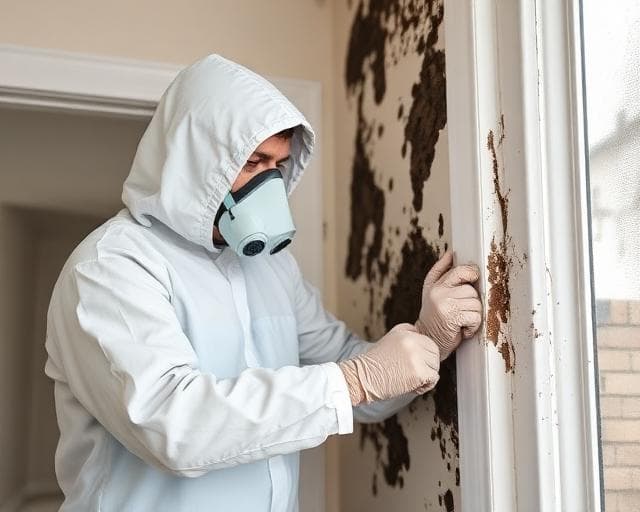
Mold Remediation in Clayton, NC
For new builds on settling ground and older homes near the river alike
Contained, HEPA-filtered remediation with a written scope before anything is removed, dried to a moisture reading rather than a deadline, and finished by correcting the water that caused it. Five-year warranty.
Built Fast, on Land That Is Still Settling
Clayton has added a great deal of housing in a short space of time, much of it on ground that was farmland or woodland until recently. When a site is cleared, cut and filled, the drainage pattern that existed there is erased, and the one that replaces it takes several wet seasons to establish itself properly.
That is why we are called to houses barely out of warranty as often as to old ones. The finished grade settles unevenly, a swale that worked on the plan sends water somewhere else in practice, and a crawl space closed up before the structure had fully dried holds that moisture in. None of it is dramatic, which is exactly why it goes unnoticed for a couple of years.
A newer home is not a lower-risk home. It is a different set of causes.
Properties Near the Neuse
The Neuse runs along the northern edge of town, and properties in the corridor and along its feeder creeks tend to sit over a higher seasonal water table. A crawl space in that position can be perfectly dry when inspected in late summer and hold standing water through a wet spring.
It means a single visit in the dry months can give a misleading picture. When we scope work on a property near the river we ask about the wet season specifically, because a remediation designed around the best conditions of the year will not survive the worst ones.
What Comes Out and What Stays
The dividing line is porosity, not appearance. Mold that has grown into a material cannot be cleaned off it; mold sitting on a dense surface can. We mark the scope before demolition so there are no surprises once the work starts.
Comes out
Cleaned and kept
How the Work Runs
Establish the water source
Moisture readings inside and a walk of the exterior. On newer lots we are looking at how the finished grade actually drains now, which is frequently not how it was intended to drain on the plan.
Contain and filter
The work area is sealed and put under negative pressure with HEPA-filtered scrubbers, so disturbed spores are captured rather than carried into the rest of the house.
Remove and treat
Porous material that has been colonised comes out; framing and dense surfaces are cleaned and treated in place. Structural softening is flagged, not covered over.
Dry to a target reading
Controlled dehumidification inside the contained space until the material reaches target moisture content. In a humid Johnston County summer this is the step that takes patience.
Correct the cause
Grading, downspouts, drainage and the crawl space envelope, depending on what the assessment found. Without this the work is temporary.
Verify and document
Clearance samples read against outdoor controls by an independent lab, and a written record of the cause, the extent and the work performed.
Stopping it from coming back
Where a crawl space keeps re-wetting, sealing it is the durable answer. See crawlspace encapsulation in Clayton, NC, or begin with mold inspection and testing if you have a smell but nothing visible.
See encapsulationWhere we work around Clayton
Free estimates across Johnston County and the eastern Triangle:
Frequently Asked Questions
New does not mean dry. On recently developed land the ground around a house has been cut, filled and compacted, and it takes several seasons for drainage patterns to settle into their final shape. Add a crawl space that was closed up before the structure had fully dried out, and a three-year-old home can hold more moisture underneath than a fifty-year-old one with established grading.
It changes what we look for. Properties near the river and its tributaries tend to sit over a higher seasonal water table, so a crawl space can be dry in August and damp through a wet spring. We want to know the history of the lot before scoping, because remediation designed around a dry-season inspection will not hold through the wet months.
The dividing line is porosity. Material that mold has grown into rather than onto has to come out, which usually means saturated drywall, insulation, carpet and pad. Framing, subfloor, masonry and other dense surfaces are cleaned and treated in place. We mark up the scope before any demolition so you know what is going and what is staying.
Because the air you would normally dry into is already carrying a great deal of moisture. In a Johnston County July, opening a space up and ventilating it can make things worse rather than better. We dry with dehumidification inside a controlled space and work to a moisture reading in the material, which takes as long as it takes rather than a set number of days.
It can be. A saturated drainfield, or a well head and supply line running close to the house, gives water a route to somewhere it should not be, and these are easy to overlook on properties outside town services. It is worth mentioning when we scope, because it changes where we look first.
It depends on the age of the home and the cause. On newer construction, grading, drainage and crawl space defects can fall within a builder warranty if they are documented while it is still live. On insurance, sudden and accidental water is treated very differently from long-term seepage. Either way we record the cause, the extent and the work carried out, so whichever route you take has evidence behind it.
Get a Free Estimate
Tell us what you are dealing with and we will scope the remediation.
Ready to help?
Speak with our team today and schedule a specialist for your Clayton property.
Call Us Today