Mold Removal & Remediation in Wilmington, NC
Containment, HEPA filtration and the moisture fix that keeps it gone
Removing mold is the easy half. On a coastal property the job is only finished when the water that fed it has been dealt with, which is why every remediation we carry out includes correcting the source and is backed by a five-year warranty.
Why Removal Alone Does Not Hold Here
Plenty of Wilmington homeowners have paid to have mold removed twice. The first contractor cut out the drywall, wiped down the framing and left, and within a season the smell was back. Nothing was done wrong in the removal itself. The problem was that the vented crawl space underneath was still pulling humid coastal air across cool surfaces every afternoon.
Between the river, the ocean and a water table that sits close to the surface, this stretch of coast keeps building materials damp for far longer than inland properties. Mold is the symptom. The moisture is the condition, and a remediation that does not address it is a temporary result you paid permanent prices for.
Every job we quote includes the source correction. If we cannot fix why the material was wet, we will tell you that before you spend anything.
Our Remediation Process
Assess and find the water
Before anything is removed we establish where the moisture is coming from and how far it has spread. Remediation planned without this step is guesswork, and on the coast it is usually wrong about the extent.
Contain the work area
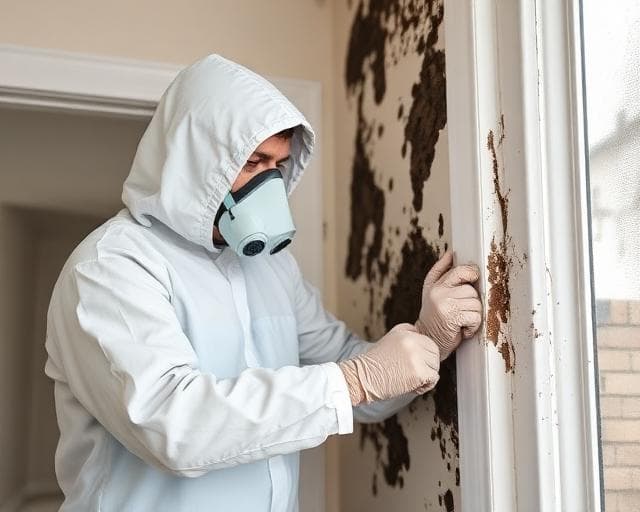
Physical containment with sheeting and sealed openings, so the demolition stage does not turn a bedroom problem into a whole-house problem. Contents are protected or moved out of the zone.
Negative air and HEPA filtration
Air scrubbers put the containment under negative pressure and filter the air inside it. Spores disturbed during removal are captured rather than pushed down the hallway.
Remove what cannot be cleaned
Porous material that has been colonised comes out: saturated drywall, wet insulation, affected carpet and pad. Framing, masonry and other non-porous surfaces are cleaned and treated in place.
Treat and dry to a target
Antimicrobial treatment on remaining surfaces, then controlled drying with dehumidification. We dry to a moisture reading, not to a fixed number of days, because coastal air makes the calendar a poor guide.
Correct the moisture source
Vapour barrier, drainage, ventilation, flashing or plumbing, depending on what the assessment found. This is the step that decides whether the mold comes back.
Verify with clearance testing
Post-remediation samples go to an independent lab and are compared against outdoor controls. You get documentation that the work met its objective, which is what buyers and insurers ask for.
Crawl Space Mold Removal
More Wilmington remediation starts under the house than anywhere else in it. A vented crawl space with bare or poorly covered ground behaves like a humidifier: warm damp air enters through the vents, meets cooler surfaces underneath the floor, and condenses on joists, subfloor and insulation.
The work usually involves removing saturated insulation and any colonised material, treating the framing, then closing the loop with a sealed vapour barrier and dehumidification so the space stops re-wetting itself. Homeowners often notice the difference upstairs first, because crawl space air does not stay in the crawl space.
After a Storm or Flood
Hurricane season is a fact of life on this coast, and Florence in 2018 showed how much water can end up inside a property that never lost its roof. Wind-driven rain gets in around windows and soffits; surge and river flooding bring contaminated water into the lowest levels of a building.
Flood water is not treated the same way as a clean supply-line leak. Material that has been in contact with it is handled as contaminated, the drying targets are stricter, and documentation matters more because a claim usually follows. The timing is tight too, since mold can take hold on damp materials within a day or two of the water arriving.
Clearance, Warranty and Insurance
A remediation is finished when it can be shown to be finished. Clearance samples are analysed by an independent laboratory and compared against outdoor controls, so the result is a measurement rather than an assurance. Our remediation work carries a five-year warranty.
If you are claiming, the paperwork is part of the job. We record the cause, the extent, the moisture readings and the work carried out, which is what an adjuster needs in order to treat the loss as sudden and accidental rather than as deferred maintenance.
Not certain it is mold?
If there is a smell or a symptom but nothing visible, start with mold inspection and testing in Wilmington, NC so the scope of work is based on readings rather than assumptions.
See inspection & testingWhere we carry out remediation
Free estimates across the following communities:
Frequently Asked Questions
Most residential jobs run from one to several days. The variables are the affected area, how much material has to come out, and how long the structure takes to dry to target. Coastal humidity slows drying, which is why we monitor to a moisture reading rather than to a calendar.
Not if the moisture that fed it is corrected. That is the whole game. Remediation that removes growth but leaves a wet crawl space, a failed vapour barrier or a leaking supply line simply buys a few months. Every job we take on includes identifying and addressing the water source, and our remediation work carries a five-year warranty.
Usually no. We build containment around the work area and run negative air pressure through HEPA filtration so spores are not pushed into the rest of the property. For large affected areas, or where an occupant has a respiratory condition, we will tell you plainly if staying elsewhere is the sensible call.
It depends on the policy and, more importantly, on what caused the water. Sudden and accidental events are more often covered than long-term seepage or maintenance issues, and many coastal policies treat flood separately from wind-driven rain. We document the cause, the extent and the work performed so your claim has something solid behind it.
We can remediate the growth on its own, but in this climate a vented crawl space over damp ground will often re-humidify and put you back where you started. We will give you an honest view of whether cleaning alone will hold on your property, or whether a vapour barrier and dehumidification is what actually solves it.
By measurement, not by eye. After remediation we carry out clearance testing, with post-remediation samples analysed by an independent lab and compared against outdoor controls. You get documentation showing the work met its objective, which is also what a buyer or insurer will want to see.
Get a Free Estimate
Tell us what you are dealing with and we will scope the remediation.
Ready to help?
Speak with our team today and schedule a specialist for your coastal property.
Call Us Today