
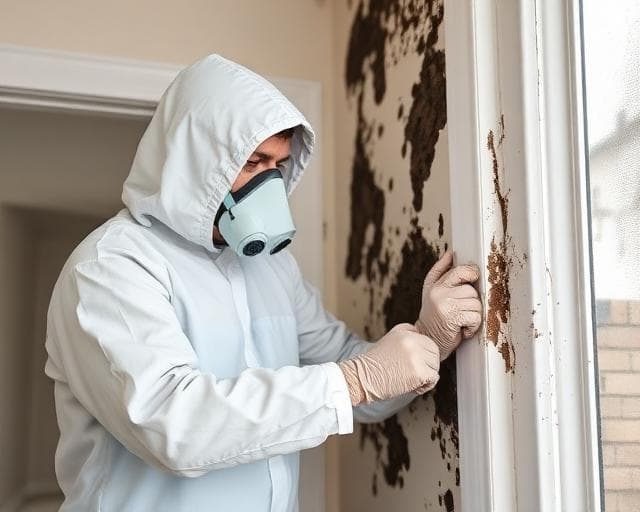
Mold Remediation in Wake Forest, NC: From Historic Plaster to Heritage Crawl Spaces
Wake Forest mold remediation has to deal with two very different towns. Around Faculty Avenue and the mill village, houses are more than a century old. Across Heritage, Holding Village and Traditions, they were built in the last 25 years. Glover Environmental removes the growth, fixes the moisture behind it and verifies the result, following IICRC S520 protocols, with a five-year warranty on the work.
Why Wake Forest Houses Grow Mold in Different Places
The town grew around Wake Forest College, which opened as an institute in 1834 and stayed for 122 years before moving to Winston-Salem in 1956. Southeastern Baptist Theological Seminary took over the campus, and the streets around it now form the Wake Forest Historic District. The Royall Cotton Mill, built in 1899, gave the town its Glen Royall Mill Village.
In those older homes, mold tends to grow where the building has aged. Plaster walls, original framing, shallow crawl spaces and worn roof flashing let moisture in slowly, and growth often stays hidden until a renovation opens a wall.
Most of Wake Forest is far newer. The population went from 12,588 in 2000 to 47,601 in 2020, and subdivisions such as Heritage, built from 2000 to 2012, and Holding Village, on the former Holding Dairy, absorbed much of that growth. The first homes in Heritage are now old enough that original crawl space vapor barriers, duct insulation and water heaters are reaching the end of their lives.
Water also arrives from outside. Smith Creek and Richland Creek run through town to the Neuse River below Falls Lake, and homes on low lots near the greenways see more groundwater than those on higher ground.
Wake Forest's Flood Claims and Rainfall
Creek flooding is a real, recent factor here. Federal flood insurance records for ZIP code 27587 show 11 claims since 1995, with five paid for a total of $97,636.¹ The biggest losses are recent: a 2024 claim after Hurricane Debby was paid $7,379, and a single 2025 claim was paid $56,253.¹
The town has seen the water too. The Town of Wake Forest reported flooding on the Smith Creek and Sanford Creek greenways in July 2023 and again in March 2025.² Water that soaks a crawl space or finished floor during a storm is exactly what starts mold if it is not dried quickly.
The background moisture is steady. The Falls Lake station, the closest long-term record to Wake Forest, has a 1991 to 2020 normal of 47.52 inches of rain a year at a mean temperature of 58.1 degrees.³ The EPA advises drying water-damaged areas within 24 to 48 hours, keeping indoor humidity below 60 percent, and treating growth over 10 square feet as a job for professional remediation.⁴
- 1FEMA OpenFEMA, NFIP claims for ZIP 27587, NFIP flood insurance claims
- 2Town of Wake Forest, greenway flooding notices, Greenway flooding on Smith Creek and Sanford Creek
- 3NOAA NCEI US Climate Normals, Annual climate normals, 1991-2020
- 4US EPA, A Brief Guide to Mold, Moisture and Your Home, Dry within 24-48 hours; humidity below 60 percent
Storm Water or an Indoor Leak? It Changes the Price
That question shapes the remediation, the cost and any insurance claim. Storm water through a crawl space calls for drying and drainage, while a slow plumbing leak calls for a repair before anything else. A plaster wall near Faculty Avenue also takes slower, more careful removal than drywall in Traditions.
We identify the source first, measure the affected area and give you a written estimate before any work starts. Estimates are free.
How We Remediate a Wake Forest Home
Our Wake Forest mold remediation plans start from the age of the house and where it sits. A plaster-walled home on Faculty Avenue, a 2010 house in Heritage and a low lot near Smith Creek each need a different approach, even when the growth looks identical.
Plaster, Lath and Old Framing Get a Narrow Cut
Near the old college campus we open only what the readings justify. Plaster is cut back to sound material, original trim is set aside where it can be saved, and old framing is cleaned and treated rather than replaced whenever it is still strong.
Open Floor Plans Get Wider Containment
Houses in Heritage, Holding Village and Traditions often have open stairwells and shared returns, so air travels between rooms easily. Plastic walls and negative air have to extend further there to keep the rest of the home clean.
Creek-Soaked Crawl Spaces Get Dried First
After water comes up from Smith Creek or Sanford Creek, speed matters more than anything. Soaked insulation is pulled, standing water removed, and drying equipment runs until the framing reads dry before any growth is treated.
Low Lots Near the Greenways Get a Drainage Plan
On streets that drain toward Smith Creek, Sanford Creek or Richland Creek, a new barrier alone will not keep groundwater out. Those jobs finish with grading, downspout or drainage corrections alongside the crawl space work, checked with readings afterwards.
Signs a Wake Forest Home Needs Mold Remediation
What brings us to a Wake Forest house depends on which part of town it is in. These are the calls we take most often.
Creek Water Reached the Crawl Space in 2025
The town recorded greenway flooding along Smith Creek and Sanford Creek in March 2025, and a 2025 flood claim in ZIP code 27587 was paid $56,253. A crawl space that took water then and was never opened and dried is the first place we look.
Renovation Dust Turned Out to Be Growth
Opening plaster in a Faculty Avenue kitchen or bath often reveals staining from leaks repaired decades ago. Sealing off the room before demolition continues keeps it from spreading through the house.
Mill Village Floors Feel Soft
Glen Royall Mill Village homes, built after the 1899 cotton mill opened, sit on shallow foundations. Soft or stained floor framing there usually means a crawl space that has been damp for years.
A Twenty-Year-Old Heritage Crawl Space Smells Earthy
Heritage opened its first homes in 2000, so original crawl space plastic, duct wrap and water heaters are now at the age when they fail. The smell reaches the living room well before anyone sees growth.
An Air Handler Drain Overflowed in Holding Village or Traditions
A clogged condensate drain in a newer home can soak a ceiling or the floor below within days of humid summer weather. Drying it fast keeps the job small.
What Wake Forest Homeowners Get From Glover Environmental
These are the commitments that matter most to the Wake Forest families we work for. All of them are backed by a five-year warranty on the remediation work.
Original Material Kept Where It Can Be
In historic district and mill village homes, removal is planned around plaster, millwork and old framing. A century-old house should lose no more of its character than the mold requires.
Work Measured Against IICRC S520
North Carolina has no state license for mold remediation, so we follow the IICRC S520 standard for containment, removal and cleaning. It is a written standard you can hold any contractor to.
A Plan That Accounts for the Creeks
Homes near Smith Creek, Sanford Creek and Richland Creek get drainage looked at as part of the job, not as an afterthought. A flood-prone lot will wet a clean crawl space again.
Heritage and Holding Village Homes Fixed at the Source
In the newer subdivisions, the cause is usually one failed component. We find it, replace or repair it, and confirm with readings that the area stays dry.
Wake Forest Areas We Serve
Housing changes quickly from one part of town to the next. Here is what drives Wake Forest mold remediation in each area.
Wake Forest Historic District and Downtown
Homes around Faculty Avenue and the old college campus, many over a century old. Plaster, original framing and shallow crawl spaces need careful, limited removal.
Glen Royall Mill Village
Mill houses from the early 1900s on modest foundations. Crawl space moisture and aging roofs are the usual starting points.
Heritage
Built from 2000 to 2012, with original crawl spaces and mechanical systems now 15 to 25 years old. Failing barriers and duct condensation are common.
Holding Village and Traditions
Newer, tighter homes where growth usually follows a plumbing or HVAC fault. Jobs are well defined once the source is found.
Homes Near Smith Creek, Richland Creek and Falls Lake
Lower lots near the creeks and greenways see storm water and higher groundwater. Drying, drainage and crawl space moisture control are part of the plan.
Wake Forest Mold Remediation Questions
Wake Forest owners usually ask about historic homes, the creeks and what insurance will do. Here are straight answers.
Yes. We work across Wake County, including the Wake Forest addresses outside town limits near Falls Lake and Rolesville. Lots near the lake and the creeks feeding the Neuse get the same drainage check as homes in town.
Yes, if it stayed wet for more than a day or two. The EPA advises drying water-damaged areas within 24 to 48 hours, and growth inside crawl space insulation is often invisible from the hatch.
Usually in part. Plaster with active growth or water damage has to be cut back to sound material, but we limit removal to the affected area and save original trim wherever possible.
Homes built in the early 2000s are now around 20 years old, which is when original crawl space plastic and duct insulation commonly start to fail. A musty smell is a good reason to look.
Water that rises from Smith Creek or Richland Creek is a flood, which standard homeowners policies exclude and separate flood policies cover. ZIP code 27587 has had 11 flood insurance claims since 1995, five of them paid. Mold from a sudden indoor leak is a homeowners question, often with a cap. We document the cause; your insurer decides.
Get a Remediation Plan for Your Wake Forest Home
Mold keeps spreading while the moisture feeding it is still there. A proper remediation removes the growth, fixes the water and confirms the result. You will know the scope and price before any work begins.
Call Glover Environmental at 919-651-1616 or use our contact page to book a free estimate. We will find the source and tell you what it will take.
Book a Remediation Estimate
Tell us what you are seeing, and we will find the source and give you a written estimate before any work starts.
Ready to help?
Speak with our team today and schedule a mold remediation estimate for your Wake Forest home.
Call Us Today