
Mold Inspection in Garner, NC: Finding What the Crawl Space Sends Upstairs
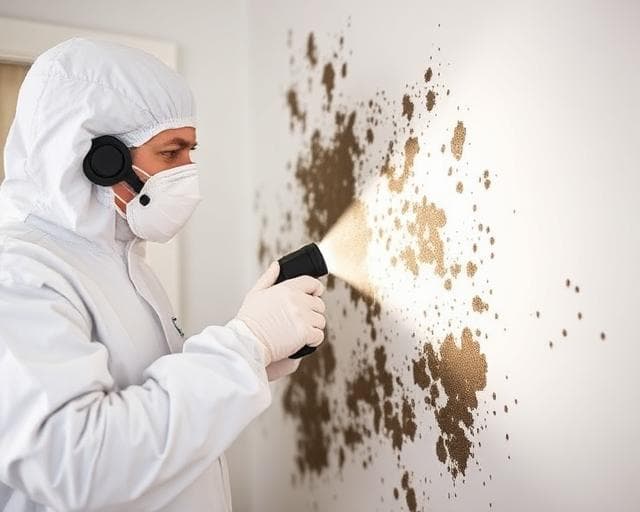
A Garner mold inspection usually starts with a smell nobody can place, or a stain that keeps coming back on the same wall. In a town that grew from about 1,200 people in 1950 to more than 31,000 by 2020, the houses come from every decade in between. The source is rarely where the symptom shows. Glover Environmental inspects Garner homes from our Raleigh office, and we measure before we sample and put both in writing.
Why Garner Houses Hide Moisture Below the Floor
Garner began as a wood-and-water stop on the North Carolina Railroad in the 1850s, and the community of Garner's Station got its post office in 1878. The town charter dates to 1905. US 70 came through in 1917 as the first paved highway in North Carolina, and most of Garner's shopping still lines it.
The housing came later, and quickly. Garner had 1,180 residents in 1950 and nearly three times that by 1960, then doubled again through the 1970s. That growth produced the ranch and split-level homes that still fill the streets off Vandora Springs Road and Timber Drive, many of them built over vented crawl spaces.
Those homes have been updated many times since. Replacement windows, extra attic insulation and a heat pump in place of the old furnace all make the living space tighter. The crawl space underneath often stays as it was built, with bare clay and open vents, so the house above and the ground below now behave like two different buildings.
Water reaches that ground from more than one direction. Swift Creek feeds Lake Benson on the town's southwest side, and Garner sits on the same heavy clay as the rest of southern Wake County. Clay holds rain near the surface, which keeps the soil under a crawl space damp long after a storm has passed.
Garner Flood Claims, Rainfall and Growth by the Numbers
Garner is not a flood town in the way river towns downstream are. Federal flood insurance records show 43 claims filed from ZIP code 27529, with 32 of them paid.¹ Payments total roughly 660,000 dollars, and the median paid claim is 5,126 dollars.¹
Those claims follow the big storms. 2016, the year of Hurricane Matthew, accounts for 10 of them, and 1996, the year of Hurricane Fran, accounts for 8.¹ Small, scattered losses fill the years in between, which fits a town where water reaches houses through grading and crawl spaces more often than through rising creeks.
The weather supplies a steady background. Raleigh-Durham International, the nearest long-term station, records a normal of 46.07 inches of rain a year at a mean temperature of 61.2 degrees.² Garner itself grew from 1,180 residents in 1950 to 31,159 at the 2020 census.³
Indoors, the number that matters is relative humidity. The EPA recommends keeping it below 60 percent, and ideally between 30 and 50 percent.⁴ Readings above that line in a crawl space or a lower level are what a Garner mold inspection is built to find.
- 1FEMA OpenFEMA, NFIP flood insurance claims, ZIP code 27529
- 2NOAA NCEI U.S. Climate Normals, Raleigh-Durham International, 1991-2020 annual normals
- 3U.S. Census Bureau, Decennial census counts, Garner town, 1950 and 2020
- 4U.S. EPA, A Brief Guide to Mold, Moisture, and Your Home
Test When the Symptoms Are Strongest
Mold growth in a Garner crawl space speeds up when summer humidity settles in and slows again in winter. An inspection in a dry month can understate what happens in August. Tell us when the smell or staining is at its worst, because that changes where we look first and how we read the results.
How a Garner Mold Inspection Runs
We work from the outside of the house in, because in Garner the cause is usually outside or underneath. Each step below decides what the next one needs to look at.
Outside the House First
We walk the foundation before opening a door. Downspouts that empty beside the wall, beds built up against the siding and driveways that tilt toward the house all show up here. Many Garner lots have gained additions, patios and new driveways since the house went up, and each one changes where roof water lands.
Under the Floor
Next we go into the crawl space with a moisture meter and a humidity logger. We read the soil surface, the sill plate and the joists, and note the condition of any vapor barrier and vents. Ductwork running through the space gets a close look, because a sweating supply duct can wet the insulation around it all summer.
The Lower Level of a Split-Level
Split-level homes are common in Garner, and their lower floor sits partly below grade. We read those walls at baseboard height and use thermal imaging where a surface reads cold. A wet patch behind finished drywall usually shows up as a cool spot long before it shows up as a stain.
Air Samples With an Outdoor Control
Where the readings call for it, we take air samples indoors and one outside on the same day. An accredited independent laboratory compares the two, which tells you whether indoor spore levels are genuinely elevated or simply match the air outside. Surface samples are taken where growth is visible and its type matters to the next step.
Going Through the Report With You
The report lists each reading by location, the lab results and photographs of what we found. We go through it with you rather than sending a table of numbers. If the inspection points at a repair, the report describes the cause and the affected area so any contractor can price it.
Signs a Garner Home Needs an Inspection
Garner homes tend to give the same handful of warnings. Each one below points us somewhere specific.
The Lower Level Smells Different From Upstairs
If the downstairs rooms of a split-level smell stale while the upper floor does not, the lower walls are the place to start. Walls set partly below grade pick up moisture from the clay outside, especially after a wet week.
Windows Started Fogging After a Replacement
Glass that fogs or drips on cold mornings after new windows go in is a sign the house is holding more moisture than it used to. The old windows leaked air and the new ones do not, so that humidity now has to go somewhere.
The Smell Arrived With a New Heat Pump
A new system with ductwork in the crawl space can change how air moves between the crawl space and the rooms above. If a musty odor showed up with the new equipment, the ducts and their connections are worth checking.
Water Stands Near the Foundation After Rain
Puddles that sit against the house for a day after a storm are feeding the soil under it. On Garner clay that water drains slowly, and the crawl space stays damp in the meantime.
You Are Buying or Selling in Garner
An older Garner home with its original crawl space is a reasonable thing to check before closing. A dated report with readings gives both sides something specific to negotiate from, and our real estate mold inspections are built around closing timelines.
Why Garner Homeowners Choose Glover Environmental
Several companies cover Garner from Raleigh. These are the differences that show up once we are at the house.
Mid-Century Crawl Spaces Are Familiar Ground
Most Garner inspections end up under the floor of a house built decades ago. Bare soil, torn vapor barrier and open vents are what we see every week, so time on site goes into measuring rather than getting oriented.
An Independent Lab Reads the Samples
Air and surface samples go to an accredited independent laboratory rather than an in-house reading. The lab results are included in your report alongside our own moisture readings.
Inspection and Repair Are Separate Decisions
We also handle mold remediation in Garner and crawl space encapsulation, but the inspection report stands on its own. You decide what to do with it, and who does the work.
A Short Drive From Our Raleigh Office
Our Raleigh office on Waters Edge Drive is a short drive west of Garner along I-40. That keeps scheduling simple, including a second visit if you want readings taken again after a repair.
Garner Neighborhoods We Inspect
Garner covers a little over 18 square miles, and the housing changes from one side of town to the other. Here is what we tend to find in each area.
Downtown Garner and the Historic District
The streets around the old Garner's Station depot hold the town's oldest houses, close to the Downtown Garner Historic District. Crawl spaces here are often shallow, with original framing and little or no vapor barrier.
Vandora Springs and Timber Drive
These corridors filled in as Garner grew through the second half of the twentieth century, and ranch and split-level homes are common. Lower-level walls and original crawl space vents are where most findings start.
Lake Benson
Homes near Lake Benson Park sit in the Swift Creek watershed, beside one of the reservoirs that supply Raleigh's drinking water. Lots that slope toward the water can hold groundwater against the uphill side of the foundation.
White Oak and the I-40 Side of Town
Newer construction around White Oak and the I-40 interchanges is more likely to have a sealed crawl space. There the questions are whether the dehumidifier is keeping up and whether the vapor barrier is still intact.
Garner Addresses Toward Johnston County
Some Garner mailing addresses sit outside town limits, in unincorporated Wake County and the Cleveland area of Johnston County. Many are newer subdivisions along NC 42, where we check the crawl space or slab edge and the grading around it.
Garner Mold Inspection Questions
These are the questions Garner homeowners ask us most, with the local numbers behind the answers where they exist. Where the answer depends on the age of the house, we say so.
It depends on the size of the house and how many samples the readings call for. We agree the sample count with you on site before anything goes to the lab, so the price is clear before any samples are taken.
Moisture readings find where the water is, and samples tell you what is growing and whether indoor air differs from outdoor air. If the readings are normal and nothing is visible, sampling may not add much, and we will tell you so.
Less than towns on major rivers. Federal records show 43 flood insurance claims from ZIP code 27529, clustered in years like 2016 and 1996, with a median paid claim of 5,126 dollars.
Not always, but it is worth measuring. Walls set partly below grade are the most common place we find elevated moisture in Garner homes, and a meter and thermal camera can locate it without opening the wall.
The EPA recommends keeping indoor relative humidity below 60 percent, ideally 30 to 50. A vented Garner crawl space can run above that through the summer, which is why we log it during the inspection.
Yes. We cover ZIP code 27529, including the unincorporated parts of Wake County and the Cleveland area of Johnston County that share Garner addresses.
Book Your Garner Mold Inspection
A smell or a stain is a symptom, and guessing at the cause is how money gets spent on the wrong repair. A Garner mold inspection gives you readings, lab results and a written report, so the next decision rests on evidence. If nothing is growing, you will have that in writing too.
Call Glover Environmental at 919-651-1616 or use our contact page to schedule an inspection. You can see everything else we do locally on the Garner service page.
Book a Mold Inspection
Tell us what you are noticing and where, and we will plan the readings.
Ready to help?
Speak with our team today and schedule an inspection for your Garner home.
Call Us Today