
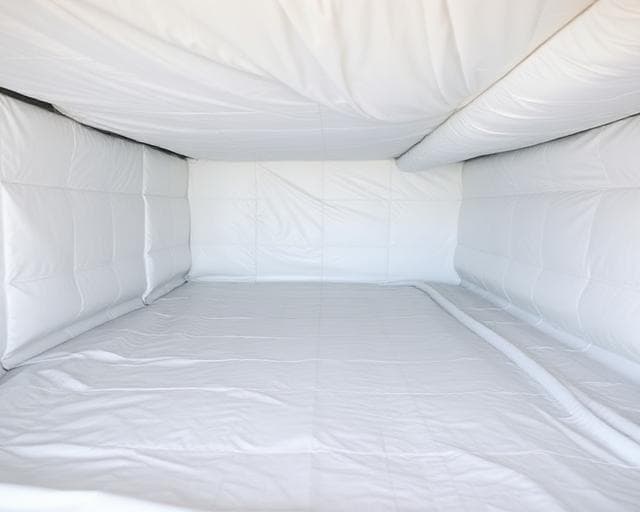
When Sealing the Crawl Space Is Worth It, Crawl Space Encapsulation in Durham, NC
Someone has quoted you a liner and a dehumidifier, and the number was higher than expected. Durham crawl space encapsulation is worth doing on some houses and a waste on others. The difference is whether the crawl space is dry enough to stay sealed. Glover Environmental works that question out first, from our base in Raleigh.
What a Sealed Crawl Space Has to Achieve in Durham
Encapsulation is not a product you add to a house. It converts an open, vented crawl space into a closed one, and North Carolina treats that as a distinct type of construction. The state residential code carries its own section for closed crawl spaces. The Office of State Fire Marshal also publishes guidance on their moisture control.
That matters because a sealed crawl space has a performance target. It is supposed to hold humidity down without ventilation doing the work. If water is still arriving, the liner just contains it.
Durham's housing makes this uneven. The low-clearance crawl spaces near downtown were never built to be sealed. Access alone can decide what is practical there. Mid-century ranches have longer runs and later additions on shallower footings. Newer construction south toward Southpoint often arrived sealed and simply needs its equipment working again.
The load is constant rather than seasonal. The regional long-term station records a 43.34 inch annual rainfall normal at a 60.8 degree mean temperature. The EPA notes that crawl space moisture can pass into the rest of the building. It travels through cracks in walls, floors, and ceilings. That is the real argument for sealing one, and also why sealing a wet one makes things worse.
The Numbers a Durham Encapsulation Has to Hit
A sealed crawl space is judged on readings, not on appearance. These are the figures the work is measured against.
North Carolina's residential code devotes a section to closed crawl spaces, and the state publishes separate guidance covering their moisture control.¹ Encapsulation here is regulated construction rather than an add-on.
The humidity target comes from the EPA. It puts the indoor ceiling at 60 percent relative humidity, and the ideal band at 30 to 50 percent.² A sealed crawl space that cannot hold that range is not finished.
Climate sets the difficulty. The regional station records a 43.34 inch annual rainfall normal at a 60.8 degree mean temperature, so the load never really stops.³
The approach itself is well studied in this state. Closed crawl space performance was researched in North Carolina's mixed humid climate. The resulting design guidance suits conditions like Durham's.⁴
- 1North Carolina Residential Code and NC Office of State Fire Marshal, Section R409, Closed Crawl Spaces
- 2U.S. EPA, Mold Course Chapter 2: indoor humidity guidance
- 3NOAA NCEI U.S. Climate Normals, Annual climate normals, Durham area
- 4Advanced Energy, Closed crawl space research and design guidance for North Carolina
Worth Doing, or Worth Fixing First?
That is the question we answer before quoting anything. Some Durham crawl spaces are ready to seal and will hold the EPA's humidity range afterwards. Others need grading, a gutter run, or a structural repair first, and sealing them early wastes the liner. Glover Environmental tells you which one you have.
How We Decide, Then Seal
Encapsulation is a decision followed by an installation, and most of the value sits in the decision. Each stage below either rules the job in, changes its scope, or sends us outside the house first.
We Establish Whether the Space Can Hold a Seal
A crawl space taking on water will not hold humidity once sealed, so this is the gate. We read wood moisture and relative humidity, then check grading and downspout discharge above the house. If water is still arriving, that gets fixed before any liner is priced.
We Measure the Space Rather Than Estimate It
Clearance, pier spacing, and the footprint of later additions all change what is installable. Low-clearance crawl spaces under Durham's older streets sometimes cannot take a full system, and we will say so. The measurement decides whether the work is encapsulation, partial sealing, or something else entirely.
We Deal With What Is Already Down There
Failed vapour barrier, wet fibreglass, and any existing growth come out before the new system goes in. Sealing over contaminated material traps it against the structure. Where growth is extensive, that is remediation work in its own right.
We Install to the Closed Crawl Space Standard
Liner, sealed vents, perimeter detail, and dehumidification where the readings call for it. North Carolina's code treats a closed crawl space as its own construction type, so the detail matters more than the material cost.
We Verify the Space Holds Its Range
The system is judged after it is closed, not when it looks finished. We log humidity and wood moisture by location and check them against the EPA's 60 percent ceiling.
When a Durham Crawl Space Is a Candidate
Sealing is right for some crawl spaces and premature for others. These five conditions are the ones that make it the correct next step.
Humidity Holds Above Sixty Percent Through a Dry Spell
Ventilation is meant to dry the space between rains, so a dry week is the test. Readings still above the EPA's 60 percent ceiling after several dry days mean venting has failed as a strategy.
Ducts in the Crawl Space Sweat in Summer
Condensation on supply ducts means the surrounding air is at its dew point. That water lands on the ground, the insulation, and the duct exterior, and sealing the space is what changes the dew point.
Fibreglass Batts Have Dropped Out of the Joists
Wet fibreglass gains weight, loses its friction fit, and falls away from the subfloor. Replacing it without closing the space simply restarts the same cycle.
The Vapour Barrier Is Partial, Torn, or Holding Water
A barrier covering most of the ground does very little, because moisture takes the open path. One with water pooled on top is actively keeping it against the structure.
The House Has an Open Vent You Close Every Winter
Manually opening and closing foundation vents is a sign the space is being managed by hand. A closed crawl space replaces that guesswork with a sealed envelope and a measured humidity level.
Why Durham Homeowners Ask Us First
Encapsulation is sold as a product, so most quotes arrive as a price per square foot. What follows is about whether the installation will actually comply and hold.
We Build to North Carolina's Closed Crawl Space Section
North Carolina gives closed crawl spaces their own code section rather than treating them as an upgrade. We detail the perimeter, vents, and liner to that standard, because a sealed space that ignores it is a liability at resale.
We Quote From Measured Clearance, Not Square Footage
Pier spacing and headroom decide what can physically be installed under a Durham house. We measure before pricing, which is why our number sometimes describes a smaller scope than a per-foot estimate.
We Will Recommend Partial Sealing When That Is The Honest Answer
Some older Durham crawl spaces cannot take a full system at all. Saying so costs us the larger job, but a half-installed system that cannot be serviced is worse than a well-executed partial one.
We Service What We Install, Including the Equipment
A closed crawl space depends on a dehumidifier and a clear condensate line for years afterwards. We size that equipment from the readings and keep the figures, so a later test has a baseline to compare.
What Decides Sealability Across Durham
Whether a Durham crawl space can be sealed comes down to headroom, foundation type, and whether equipment is already down there. The city sorts fairly neatly into three of those situations.
Tight Clearance: Morehead Hill, Old North Durham, Lakewood
Early housing on shallow footings, where headroom is frequently under the working minimum. These are the addresses where we most often recommend sealing part of the space and improving drainage instead of a full system.
Workable Clearance on Sloping Ground: Duke Park, Northgate Park
Mixed-era houses on lots that fall away, so one side of the crawl space sits deeper than the other. Sealing works here, but the perimeter detail has to follow the grade rather than a uniform line.
Long Runs Under Larger Footprints
Bigger houses give more perimeter and more penetrations to seal, which is where most failures occur. One unsealed vent or rim-joist gap will stop the whole space holding its humidity range.
Already Sealed, Needing Service: Southpoint and the Newer South
Construction from the 1990s onward often arrived with a liner and a dehumidifier already fitted. The work here is almost always a failed unit, a blocked condensate line, or a liner seam that has opened.
Additions and Conversions Anywhere in the City
A later addition usually means a second, shallower crawl space joined to the original. That junction is the single most common place we find a seal that was never completed.
Durham Crawl Space Encapsulation Questions
These are the questions people actually search before calling, including the sceptical ones. We have answered those straight rather than selling past them.
There are real ones. It costs more than a vapour barrier, and it usually commits you to running a dehumidifier afterwards. It can also hide a developing leak, because nobody goes down there any more. Sealed over water, it makes a damp crawl space worse rather than better.
It is worth it when the closed space can hold the EPA's humidity range afterwards. It is not worth it while water is still arriving, because the liner will simply contain that water against your framing.
Cost follows footprint, clearance, how many penetrations need sealing, and whether a dehumidifier is required. We measure the space rather than quoting per square foot, since Durham headroom varies enough to change what is installable.
The state residential code carries a dedicated section for closed crawl spaces. The Office of State Fire Marshal also publishes guidance covering their moisture control.
Sealing is a moisture control measure rather than a remediation method, so it will not remove what is already growing. Existing growth should come out before the space is closed, or the liner traps it against the structure.
Usually yes, because a closed space has no ventilation performing the drying. The readings determine the size, and we log what the space actually holds once the unit is running.
Find Out Whether Your Crawl Space Should Be Sealed
You do not need to decide between quotes on your own. A Durham assessment tells you whether the space can hold a seal. You also get what has to be fixed first, and the readings as they stand. If encapsulation is not the right call yet, you will hear that before spending anything on it.
Glover Environmental assesses and seals crawl spaces across Durham from our Raleigh base. We handle the remediation and structural work when the space needs it first. Reach us through the contact page.
Book a Crawl Space Assessment
Tell us what you are seeing under the house, and we will check whether it can hold a seal before quoting.
Ready to help?
Speak with our team today and schedule a crawl space assessment for your Durham home.
Call Us Today