A Musty Smell That Returns Each Summer, Mold Inspection in Clayton, NC
You noticed it again when the humidity climbed, so a Clayton mold inspection moved up your list. Maybe the air in the hallway turns heavy by mid-July. Johnston County homes sit on damp ground near the Neuse River. Glover Environmental works out of Raleigh, twenty minutes west, and tests Clayton homes year round.
Why Clayton Homes Hold Moisture
Clayton sits in Johnston County, on the southeast edge of the Triangle. The Neuse River runs along its northern boundary before bending toward Smithfield. That river corridor shapes how moisture behaves in local homes.
Growth here arrived in waves, and the housing stock shows it. Downtown Clayton holds early twentieth century homes on brick pier foundations with vented crawl spaces. Flowers Plantation, east of town along NC 42, filled in from the late 1990s onward. Glen Laurel and Riverwood went up around their golf courses in the same stretch. Portofino came later, with larger lots west of the bypass.
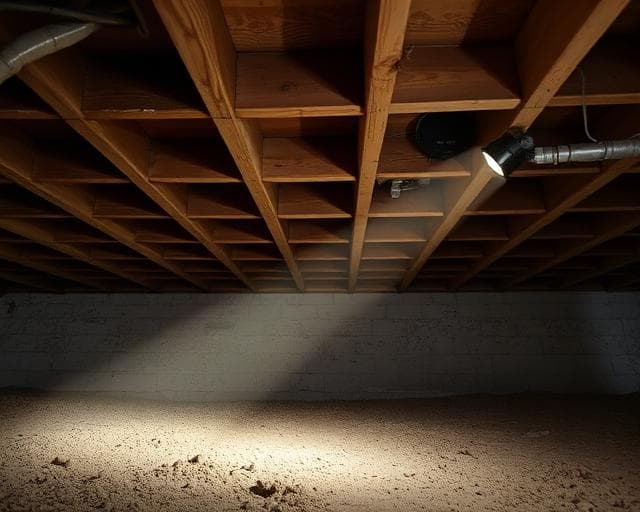
Those eras matter for a mold inspection. A 1920s crawl space on Main Street has bare soil underneath and open foundation vents. A 2005 house in Flowers Plantation more often has a sealed crawl space. A supply duct runs through it, and the dehumidifier may have quit. The failure mode differs, so the inspection differs.
Climate ties it together. The nearest long-term weather station, Raleigh-Durham International, averages 46.07 inches of rain a year at a mean temperature of 61.2 degrees. Warm, wet air moves into cool crawl spaces and condenses on joists. The EPA notes that crawl spaces with bare earth floors are common sites of hidden mold. Soil wicks moisture upward, and the warm space evaporates it into the air.
Flood and Humidity Records for Johnston County
Flood history in Johnston County is concentrated, not constant. Federal flood insurance records list 311 claims across the county, with 258 of them paid.¹ Those payments total just over 11.2 million dollars, at a median of 19,516 dollars per claim.¹
The dates cluster around hurricanes. 2016 alone accounts for 120 of those 311 claims, the year Hurricane Matthew pushed the Neuse out of its banks.² Hurricane Floyd produced 46 in 1999, and Fran produced 42 in 1996.²
Rainfall is steadier. The Raleigh-Durham station averages 46.07 inches a year, with a mean temperature of 61.2 degrees.³ That combination keeps crawl space air near the dew point for much of the summer.
The threshold that matters indoors is humidity, not rainfall. The EPA advises keeping indoor relative humidity below 60 percent, and ideally between 30 and 50 percent.⁴ Readings above that line are what a Clayton inspection is looking for.
- 1FEMA OpenFEMA, NFIP flood insurance claims, Johnston County
- 2FEMA OpenFEMA, Johnston County claims by year of loss
- 3NOAA NCEI U.S. Climate Normals, Raleigh-Durham International, 1991-2020 annual normals
- 4U.S. EPA, A Brief Guide to Mold, Moisture, and Your Home
Know What Is Under the House Before You Decide
A Clayton inspection should end with a written answer, not a sales pitch. Glover Environmental documents what we find, where we found it, and the moisture readings behind it. If the report says nothing is growing, that is the result. You can hand the same document to a buyer, a lender, or another contractor.
How We Inspect a Clayton Home
A Clayton inspection is a set of measurements, not a tour. Each number below has a threshold attached, and the thresholds decide what happens next.
Soil and Joist Moisture, Downtown Pier Foundations
On the brick pier homes near Main Street we meter bare soil, then joist bottoms at the perimeter. The EPA attributes hidden crawl space mold to exactly this path, where soil wicks moisture upward and the warm space evaporates it. A perimeter joist reading well above the interior joists points at vent placement rather than plumbing.
Relative Humidity Against the 60 Percent Line
The EPA sets the indoor ceiling at 60 percent relative humidity, ideally 30 to 50 percent. In sealed crawl spaces off NC 42 we log humidity at the dehumidifier and at the far corner. A spread between those two readings means the unit is no longer reaching the whole space.
Dew Point Margin Through a Raleigh Summer
The nearest long term station records a 46.07 inch annual rainfall normal at a 61.2 degree mean. Those conditions hold Clayton crawl space air close to its dew point for weeks at a stretch. We compare surface temperature against dew point to show how little margin a given crawl space has.
Band Joist Readings on Previously Flooded Addresses
Of 311 recorded flood insurance claims in Johnston County, 120 fall in 2016 alone. On those addresses we read the band joist and sill, not just the floor. Framing dried only at surface level can stay wet well past the year the carpet was replaced.
Signs a Clayton Home Needs Testing
Mold rarely announces itself in a Clayton home. These are the patterns that bring us out to Johnston County addresses most often.
The Smell Peaks in July and Fades in October
A musty odour that tracks the season points at crawl space humidity rather than a leak. In Clayton that cycle follows the summer dew points that keep vented crawl spaces damp for weeks.
Floors Feel Soft Near an Exterior Wall
Older Downtown Clayton homes on pier foundations can develop soft subfloor where a vent sits close to grade. Walk the perimeter rooms barefoot, and note any spot that gives slightly underfoot.
Your Crawl Space Dehumidifier Stopped Draining
Sealed crawl spaces in Flowers Plantation and Portofino depend on a working dehumidifier and a clear condensate line. When that line clogs, humidity climbs past the EPA's 60 percent mark within days.
The House Took Water in a Past Hurricane
Johnston County recorded 120 flood insurance claims in 2016 alone. If your home flooded during Matthew, Floyd, or Fran, the original drying may never have reached the framing.
A Sale or Refinance Is Coming Up
Buyers and lenders in Johnston County increasingly ask for documentation on crawl space moisture. A dated report with readings is easier to supply before the listing than during due diligence.
Why Clayton Homeowners Call Us
Plenty of companies will drive to Clayton from Raleigh. These are the reasons customers in Johnston County call us back.
Twenty Minutes From Clayton, Not Two Hours
Our base in Raleigh sits about twenty minutes west of Clayton on US 70. That distance makes a follow-up reading practical when a first result sits near the threshold.
Crawl Space Work Is the Core of What We Do
Most Clayton mold findings trace back to a crawl space, and crawl spaces are our daily work. We already handle encapsulation and structural repair on Johnston County homes, so we read those spaces quickly.
Inspection Findings Kept Separate From Repair Scope
Because we also remediate, we document the inspection so it stands on its own. The readings, locations, and lab results stay in your hands, whoever ends up doing the work.
Familiar With How the Neuse Corridor Drains
Homes in Riverwood and along the river bend hold ground moisture differently than those up near NC 42. Knowing which Clayton streets stay wet after a storm narrows where we look first.
Clayton Neighborhoods We Test
Clayton is not one housing type, and the inspection changes by area. Here is what we tend to find in each part of town.
Downtown Clayton
The oldest housing stock sits here, much of it on brick piers with vented crawl spaces and bare soil. Inspections in this area concentrate on vent placement, grade height, and joist moisture near the perimeter.
Flowers Plantation
East of town along NC 42, these homes date mostly from the late 1990s onward and often have sealed crawl spaces. The dehumidifier, its condensate line, and any duct in the space are the first things we check.
Glen Laurel
Built around the golf course, Glen Laurel homes often sit on sloped lots where runoff collects against one wall. We map moisture on the downhill side first, then compare it to the opposite corner.
Riverwood
Riverwood sits closer to the Neuse, and ground moisture here lingers after heavy rain. Readings taken a week apart often differ enough to change what we recommend.
Portofino
Larger lots west of the bypass mean longer crawl spaces and more duct run to inspect. A single failed dehumidifier covers more square footage here before anyone notices the smell.
Clayton Mold Inspection Questions
Below are the questions we are asked at Clayton addresses, answered with the Johnston County numbers behind them. Where the answer turns on your build year, we have said which way.
Federal records list 311 flood insurance claims countywide, of which 258 were paid, totalling about 11.2 million dollars. The median paid claim is 19,516 dollars, and the losses cluster in hurricane years rather than spreading evenly.
Hurricane Matthew accounts for 120 of those 311 claims on its own. Floyd produced 46 in 1999 and Fran produced 42 in 1996, which is why we ask which storms your address has seen.
Local normals run 46.07 inches of rain a year at a 61.2 degree mean temperature. That keeps vented crawl space air near its dew point through much of the summer, which is the condition mold needs.
The EPA puts the ceiling at 60 percent relative humidity and the ideal band at 30 to 50 percent. A sealed crawl space reading above 60 at the far corner usually means the dehumidifier is no longer covering the space.
Cost follows crawl space footprint and sample count, so the larger newer builds can run higher. We settle the sample count with you at the house before anything goes to a lab.
Every reading in the report is tied to a named location, so another contractor can repeat it. You keep the document regardless of who does the work.
Get a Clear Answer on Your Clayton Home
You do not have to decide what is wrong before you call. A Clayton mold inspection gives you readings, locations, and a written record you can act on, this summer or next. If nothing is growing, you will have the baseline in writing. If something is, you will know where it is and what is feeding it.
Glover Environmental tests homes across Clayton and the wider Johnston County area from our Raleigh base. Reach us through the contact page to arrange an inspection.
Book a Mold Inspection
Tell us what you are noticing and where, and we will plan the readings.
Ready to help?
Speak with our team today and schedule an inspection for your Clayton home.
Call Us Today