
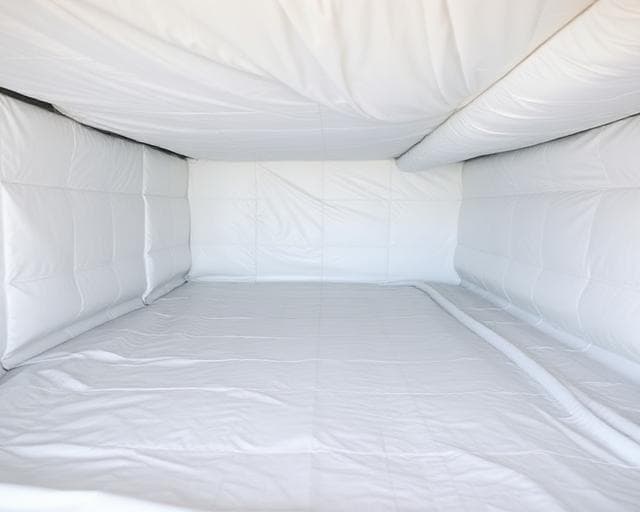
On the Coastal Plain the Water Comes From Below, Crawl Space Encapsulation in Wilmington, NC
Your crawl space is damp again and the grading looks fine. Wilmington crawl space encapsulation runs into a problem the Triangle does not have. Here the water rises out of a shallow table in sandy soil, rather than running downhill into the foundation. Glover Environmental plans coastal work around that difference.
What Makes a Wilmington Crawl Space Different
Wilmington sits in New Hanover County, on a narrow strip between the Cape Fear River and the Atlantic. Almost the entire city is coastal plain, and the ground under it is sand rather than the clay that defines the Triangle.
Sand drains fast, which misleads people. The water simply arrives from a different direction. Below that free-draining sand the table sits close to the surface. It rises with sustained rainfall, and with conditions on the river and the sounds.
The rainfall figure is the one that reframes everything. Wilmington's own long-term station records a 57.61 inch annual precipitation normal at a 64.0 degree mean temperature. The inland Raleigh station records 43.34 inches at 60.8 degrees. A third more water falls here, onto warmer ground, every year.
Building practice has adapted where the exposure is worst. Near Wrightsville Beach, raised and pier construction is the norm rather than an upgrade. The downtown historic district and Carolina Heights sit on older pier foundations that predate any moisture strategy. North around Ogden the elevation changes enough between streets to change the answer entirely.
Flood designation matters here in a way it does not inland. Parts of the city carry flood-zone status affecting insurance and what can be installed beneath a house. The paperwork is part of the job rather than an afterthought.
The Coastal Numbers Behind the Work
A sealed crawl space in Wilmington has to work against a heavier load than one inland. These are the figures that set it.
Wilmington's long-term station records a 57.61 inch annual precipitation normal at a 64.0 degree mean temperature.¹ The inland Raleigh station records 43.34 inches at 60.8 degrees.² About a third more rain falls on Wilmington, and it falls on warmer ground.
The humidity target does not move to accommodate that. The EPA still puts the indoor ceiling at 60 percent relative humidity, with 30 to 50 percent as the ideal band.³ A coastal crawl space simply has to work harder to hold it.
The construction standard does not move either. North Carolina gives closed crawl spaces a dedicated section of the residential code, applied the same on the coast as inland.⁴ What changes is the drainage the design has to carry before the liner can hold.
- 1NOAA NCEI U.S. Climate Normals, Wilmington annual precipitation and temperature normals
- 2NOAA NCEI U.S. Climate Normals, Raleigh annual precipitation and temperature normals, coast vs Triangle
- 3U.S. EPA, Mold Course Chapter 2: indoor humidity guidance
- 4North Carolina Residential Code, Section R409, Closed Crawl Spaces
Sealing Alone Will Not Beat a Water Table
That is the honest starting point on this coast. A liner stops ground vapour, but it does not stop water that rises into the space from underneath. Drainage, a sump where the elevation calls for it, and correctly sized dehumidification are what make a Wilmington seal hold. Glover Environmental works out which of those your lot needs.
How We Plan a Coastal Encapsulation
A Wilmington crawl space is assessed for where its water comes from before anything is specified. The order below reflects that the answer here is usually below the house rather than beside it.
We Establish Where the Water Table Sits
Readings taken after dry weather and after rain tell us whether the space is receiving groundwater or surface water. On lower ground toward Masonboro Sound the difference between those two visits can be substantial. That gap decides whether drainage has to come before a liner.
We Check Whether Grading Is Even Relevant
Inland, regrading solves a large share of crawl space problems. On sandy coastal soil with a high table it often changes very little. We will say so rather than sell earthworks that cannot help.
We Look at the Foundation Type Honestly
Raised and pier construction near the coast behaves differently from an enclosed perimeter inland. Some of these spaces are better served by improved ventilation and drainage. That is a real argument among Wilmington homeowners, and often the right one.
We Size Drainage and Dehumidification for 57 Inches of Rain
Equipment specified for Triangle conditions is undersized here. We size the dehumidifier and any drainage against Wilmington's own rainfall normal rather than a regional average.
We Verify Against the Same Published Ceiling
The target does not change because the climate is harder. Final humidity and wood moisture are logged by location and checked against the EPA's 60 percent ceiling.
Signs a Wilmington Crawl Space Needs Attention
Coastal symptoms arrive on a different schedule from inland ones. Timing is usually what tells you which mechanism you are dealing with.
It Is Dry in a Drought and Wet in a Wet Month
Inland crawl spaces react to individual storms. A coastal space fed by the table reacts to rainfall accumulated over weeks. The pattern follows the season rather than the forecast.
Water Appears With No Runoff Reaching the House
Nothing has come off the roof or the driveway, yet there is water underneath. On sand over a shallow table, that combination effectively rules out a surface cause.
Hardware Is Corroding Faster Than It Should
Salt-laden coastal air attacks strapping, duct seams, and equipment housings. Rapid corrosion is a reading on the humidity the space has been holding, visible without a meter.
Skirting on a Raised House Has Been Closed In
Raised and pier homes near the coast are built to let air pass underneath. Once storage, lattice, or later infill encloses part of that, the design stops working and moisture collects where the air stopped moving.
The House Sits in a Flood Zone and Nobody Has Looked Since the Last Storm
Storm history in New Hanover County is not theoretical. Where water has been under a house before, the question is whether anything beneath the floor was ever opened up and dried.
What Glover Brings to a Wilmington Crawl Space
We are based in Raleigh and cover Wilmington as a planned service area rather than a same-day one. These are the reasons coastal homeowners still bring us in.
We Diagnose the Water Mechanism Before Specifying
Most quotes here price a liner and a dehumidifier from a walkthrough. We establish whether the water is rising or running first, because that determines whether a seal can hold at all.
We Will Say When a Coastal Space Should Not Be Sealed
Some raised and pier-built homes are better served by drainage and ventilation. That view is held by plenty of people on this coast. We would rather agree with it than install something that fails.
We Size Equipment to Wilmington, Not to the Triangle
A dehumidifier chosen for 43 inches of annual rain is wrong for 57. Our specification uses the local normal, which is the single most common thing we see undersized here.
Scheduling Is Planned, and We Say So Up Front
Covering the coast from Raleigh means we book coastal work rather than promising an immediate visit. You get an honest date instead of a missed one.
Wilmington Areas We Cover
Ground conditions shift noticeably across Wilmington, and so does the right approach. Here is what tends to decide a job in each area.
Downtown Historic District and Carolina Heights
Older housing on piers, much of it predating any moisture strategy. Perimeter condition and existing ventilation decide whether sealing is even practical.
Toward Masonboro Sound
Lower ground nearer the water, where the table sits closest to the underside of the structure. Drainage and a sump are far more likely to be required before any liner.
Wrightsville Beach and the Raised Coastal Builds
Raised and pier construction designed for the exposure. Work here is usually about managing what has been enclosed later rather than sealing the original structure.
Ogden and the Northern Suburbs
Elevation varies over short distances, so two neighbouring streets can need different answers. We read each lot rather than applying an area-wide assumption.
Inland Toward the Cape Fear River
Mixed ground with both surface and groundwater influence. These are the addresses where readings taken on two separate visits matter most.
Wilmington Crawl Space Encapsulation Questions
These come up on nearly every coastal call, including the argument about whether sealing suits this climate at all. Where the answer depends on your foundation or your ground, we say which.
Plenty of people here argue it should not, and sometimes they are right. Where a shallow table feeds the space, drainage has to come first or a liner traps that water against the structure.
The station here records 57.61 inches of rain a year against Raleigh's 43.34, at a warmer mean temperature. A dehumidifier specified for Triangle conditions is working against roughly a third more water.
A sump handles water that has already entered, which a liner alone cannot. Whether you need one depends on where your lot sits relative to the table. That is why we read the space after dry weather and again after rain.
Published local ranges run from roughly $1,500 to $15,000 depending on the size of the space. Coastal jobs sit higher in that range more often, because drainage and larger dehumidification are needed more frequently.
It can affect both insurance and what is permitted beneath the house. We establish that before specifying, rather than discovering it partway through the work.
Sometimes, though often the better answer is reopening what has been enclosed. These houses were designed to breathe underneath, and the problem is usually that something stopped them.
Get the Water Mechanism Identified First
On this coast that is the question worth answering before anyone prices a liner. A Wilmington assessment establishes whether water is rising or running, what drainage the lot needs, and what the readings are now. If sealing is not the right answer for your foundation, you will be told that.
Glover Environmental covers Wilmington and New Hanover County from our Raleigh base, scheduled rather than same-day. Reach us through the contact page.
Book a Crawl Space Assessment
Tell us what you are seeing under the house, and we will plan readings around where the water comes from.
Ready to help?
Speak with our team today and schedule a crawl space assessment for your Wilmington home.
Call Us Today