Preventing Mold Growth in Your Chapel Hill Home
September 29, 2026 · 7 min read
Mold does not arrive. It is already here, drifting through every house in Orange County as ordinary airborne spores. What decides whether it becomes a problem is whether it finds water. That is genuinely good news, because water is the one variable you control. Preventing mold growth in a Chapel Hill home is therefore a moisture-management job, not a cleaning one.
Key Takeaways
- Keep indoor relative humidity under 60 percent, and ideally between 30 and 50 percent.
- Spores are unavoidable and harmless until they land somewhere damp, so moisture is the real target.
- In a town where over half of homes are rented, prevention depends on who is watching the house.
Why Homes Here Are Unusually Exposed
Two local facts shape mold risk here, and neither is about the weather.
The first is tenure. Census figures put the town's owner-occupied rate at just 47.4 percent. More than half of the housing stock is rented, across roughly 21,189 households. Rented homes tend to have someone who notices a problem and someone else who pays to fix it, which slows everything down.
The second is turnover. Only 73.7 percent of residents lived in the same house a year earlier. Roughly one household in four is new. A slow leak that began under the last occupant often goes unreported, because nobody remembers when the stain appeared.
Add a humid North Carolina summer and you have conditions that reward attention and punish assumption. Most of the preventable cases Glover Environmental sees locally trace back to one of those two facts.
The One Number Worth Owning
If you do nothing else, watch your humidity. The EPA's guidance on mold and moisture recommends keeping indoor relative humidity below 60 percent, ideally between 30 and 50 percent. Above that band, spores no longer need a leak. Ambient moisture alone becomes enough.
A humidity meter costs somewhere between $10 and $50 at a hardware store. It is the cheapest preventive tool in this article by a wide margin. Put one in the room you worry about most, then check it through August.
If readings sit stubbornly high, a dehumidifier is usually the answer. Running the air conditioning also dehumidifies, which matters for the empty-house problem below.
Where Moisture Actually Gets In
Preventing mold growth in a Chapel Hill home is unglamorous work. It is mostly a short list of places to look at twice a year. Most of them are places you never otherwise open.
Crawl Spaces
Many older Chapel Hill homes sit over vented crawl spaces on bare soil. Ground moisture rises continuously into the floor above. A vapor barrier over the soil is the single biggest improvement most of these houses can make.
Bathrooms Without Working Extraction
Run the fan during every shower and for fifteen minutes afterward. If the fan vents into the attic rather than outside, it is relocating the problem upward. That misrouting is common in homes where bathrooms were added later.
Around Windows and Doors
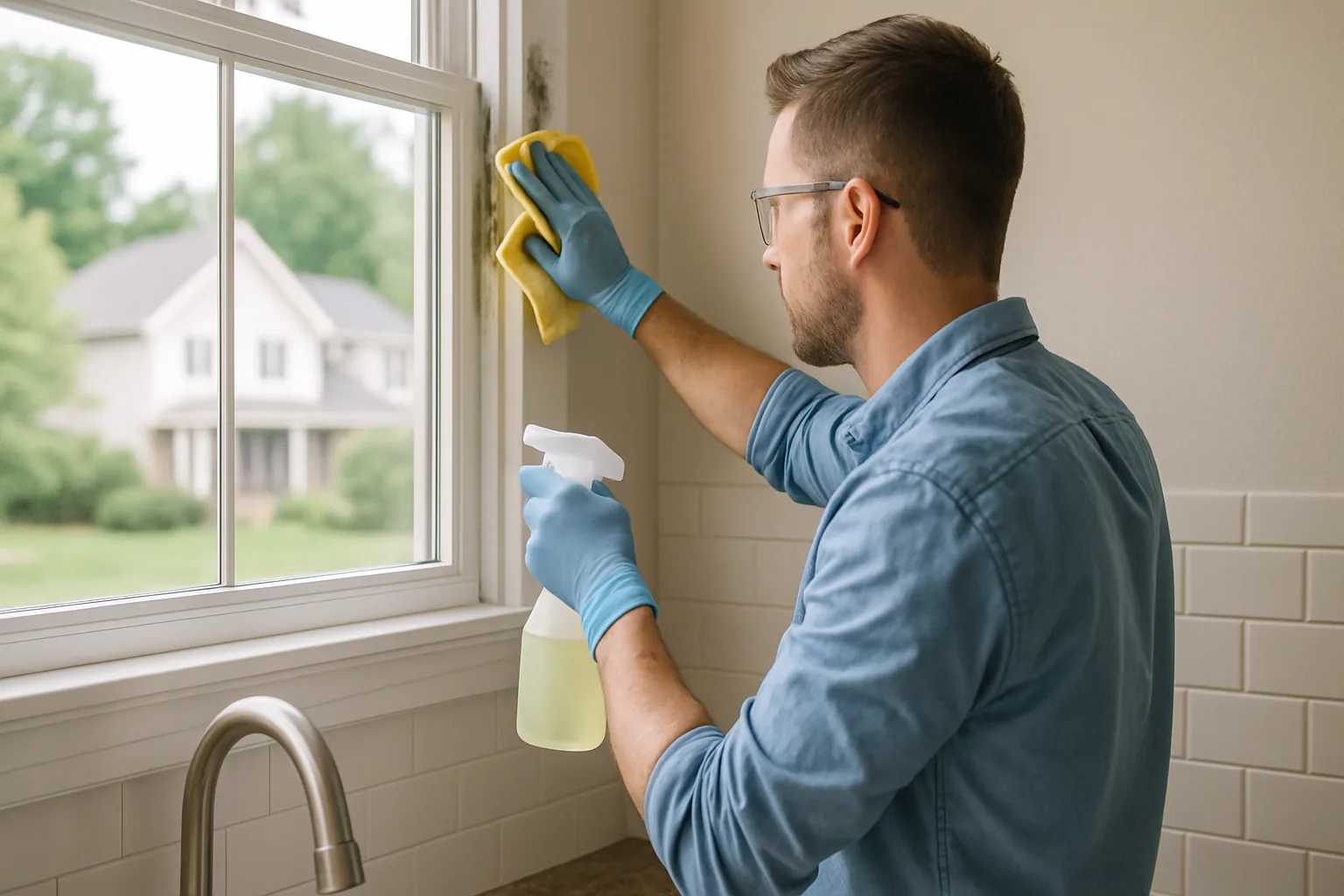
Condensation on glass in winter is a signal, not a nuisance. Persistent damp on the frame or sill means humid indoor air is meeting a cold surface. Wiping it dry treats the symptom while the cause continues.
Under Sinks and Behind Appliances
Supply lines and drain connections fail slowly and out of sight. Open the cabinet under each sink twice a year and feel the back panel. Dishwashers and refrigerator water lines deserve the same occasional look.
Attics and Roof Penetrations
A small roof leak can run for a season before a ceiling shows it. Check attic sheathing for dark staining once a year. The town's mature tree canopy means more debris in gutters, which pushes water where it should not go.
Gutters, Grading and the Ground Outside
Prevention starts outside the wall. Blocked gutters send water down the exterior instead of away from it. Soil that slopes toward the house delivers that water straight to the foundation, and from there into a crawl space.
Clearing gutters twice a year is dull and effective. Check that downspouts discharge well clear of the wall, not beside it.
HVAC Condensate Lines
Air conditioning removes moisture from the air, and that water has to drain somewhere. A blocked condensate line backs up into the air handler or the pan beneath it. That produces a steady water supply inside a dark enclosure, which is close to ideal conditions for growth.
Check the pan during the cooling season and confirm the line is running clear. An air handler in an attic or closet deserves particular attention.
The Local Risk Calendar
Timing matters more here than in most places. Summer is the obvious pressure point, because warm humid air moves into cooler enclosed spaces and condenses.
The less obvious risk is the empty house. In a university town, properties routinely sit unoccupied for weeks between May and August. If the thermostat goes off while nobody is there, indoor humidity climbs unchecked in exactly the hottest, wettest stretch of the year.
If you leave a Chapel Hill property empty over summer, leave the air conditioning set around 78 degrees rather than off. It costs less than the alternative. A cheap humidity monitor that logs readings will tell you whether the setting is working. Check it once when you return rather than trusting the thermostat alone.
What Mold Actually Needs to Start
It helps to know what you are denying it. Growth requires three things: spores, an organic surface to feed on, and moisture.
You cannot remove the spores, which are a normal part of indoor and outdoor air everywhere. You cannot remove the food either, because drywall paper, wood, dust and fabric all qualify. Moisture is the only leg of that tripod you can take away. That is why every serious prevention measure is really a moisture measure.
That framing also explains why cleaning alone disappoints so many homeowners. Wiping a surface removes what grew. It leaves the water that grew it.
Renting or Renting Out? Prevention Splits in Two
This is where local advice usually stops being generic.
If you rent, report water immediately and in writing. A dated message establishes when the problem started, which matters enormously later. Run extraction fans, avoid drying laundry indoors, and say something about condensation before it becomes staining.
If you own a rental here, the risk is that nobody tells you until move-out. Ask about damp at every inspection rather than waiting for a complaint. A vapor barrier and a working bathroom fan cost far less than a remediation between tenancies. UNC's environment, health and safety team publishes its own indoor air quality guidance. It is a reasonable benchmark for what diligence looks like.
Frequently Asked Questions
Is mold a problem in North Carolina?
Yes, and the climate is the reason. Warm humid summers keep indoor surfaces near the moisture threshold mold needs. It is manageable rather than inevitable, provided humidity stays controlled.
What time of year is worst for mold?
Late spring through early autumn, when outdoor humidity is highest. Enclosed spaces such as crawl spaces and closed-up rooms hold that moisture longest. Winter brings a narrower condensation problem around cold surfaces.
What kills mold naturally in a house?
Household options like vinegar can handle a small surface patch on a hard material. None of them address the moisture underneath, so growth returns. Removing the water source does more than any cleaning product.
What not to spray on mold?
Avoid mixing bleach with ammonia or other cleaners, which produces dangerous fumes. Avoid painting or caulking over growth, because paint applied to a moldy surface tends to peel. Also avoid dousing porous material, since soaking it adds the very moisture you are fighting.
What plant removes 78% of airborne mold?
That figure traces back to sealed-chamber research and does not transfer to a real house. Houseplants will not meaningfully reduce indoor mold, and overwatered pots can add moisture. Treat this as a myth rather than a strategy.
What are the warning signs I should act on?
A persistent musty smell, visible dark patches, and damp that returns after drying are the practical three. Staining that reappears through fresh paint suggests water still moving behind the surface. Any of these justify a look rather than a wait.
When Prevention Has Already Been Outrun
Sometimes the humidity meter arrives after the fact. Perhaps a musty smell has settled in. Perhaps a patch keeps returning in the same spot. At that stage prevention is no longer the task at hand.
At that point what helps is knowing the extent, which is what mold inspection in Chapel Hill is for. Glover Environmental will identify what is growing and find the water feeding it. If it turns out to be a small surface problem you can manage yourself, we will say so.
Where growth has spread into wall cavities or a crawl space, our mold remediation team takes it on. Containment, removal and the moisture repair are handled together. Fixing one without the other simply resets the clock.