Signs You Need Crawlspace Encapsulation in Clayton, NC
September 9, 2026 · 6 min read
That musty smell that returns every time it rains is not just a quirk of an older home. In Clayton, it usually means moisture is collecting under your floors and drifting up into your living space. Most homeowners never look under the house. That is exactly why crawlspace problems grow quietly for years before anyone notices the damage.
Key Takeaways
- Musty odors, cupped floors, rising indoor humidity, and recurring mold are the clearest signs a crawlspace needs encapsulation.
- Clayton's clay-heavy soil and humid summers keep vented crawlspaces damp for months at a time.
- Encapsulation in North Carolina typically costs $5,000 to $15,000 and lasts 15 to 20 years when installed to code.
The Warning Signs Clayton Homeowners Notice First
Most encapsulation calls start with a symptom upstairs, not standing water below. These are the signals that turn a search for crawlspace encapsulation signs near me Clayton NC into a service call. If two or more sound familiar, your crawlspace deserves a professional look.
Musty Odors That Come Back After Every Rain
A large share of the air on your first floor rises from the crawlspace through gaps around plumbing and subflooring. When damp, earthy smells appear after summer storms, moisture is almost certainly sitting under the house. Air fresheners mask it for a day. The source stays put.
Cupped Hardwood or Sloping Floors
Wood flooring absorbs moisture from below and swells unevenly. Boards curl up at the edges, a pattern installers call cupping. Sticking doors, squeaky spots, and gradual sagging near the middle of the home follow the same physics. By the time floors move, the joists below have often been damp for a long while.
Indoor Humidity You Can Feel
The NC State Extension mold and moisture checklist recommends keeping indoor humidity below 60 percent, ideally between 30 and 50 percent. Clayton summers push outdoor humidity well past 70 percent. A vented crawlspace pulls that thick air straight in, where it condenses on cool ducts, pipes, and framing. If your air conditioner runs constantly and the house still feels sticky, the crawlspace is a prime suspect.
Visible Mold or a Failing Vapor Barrier
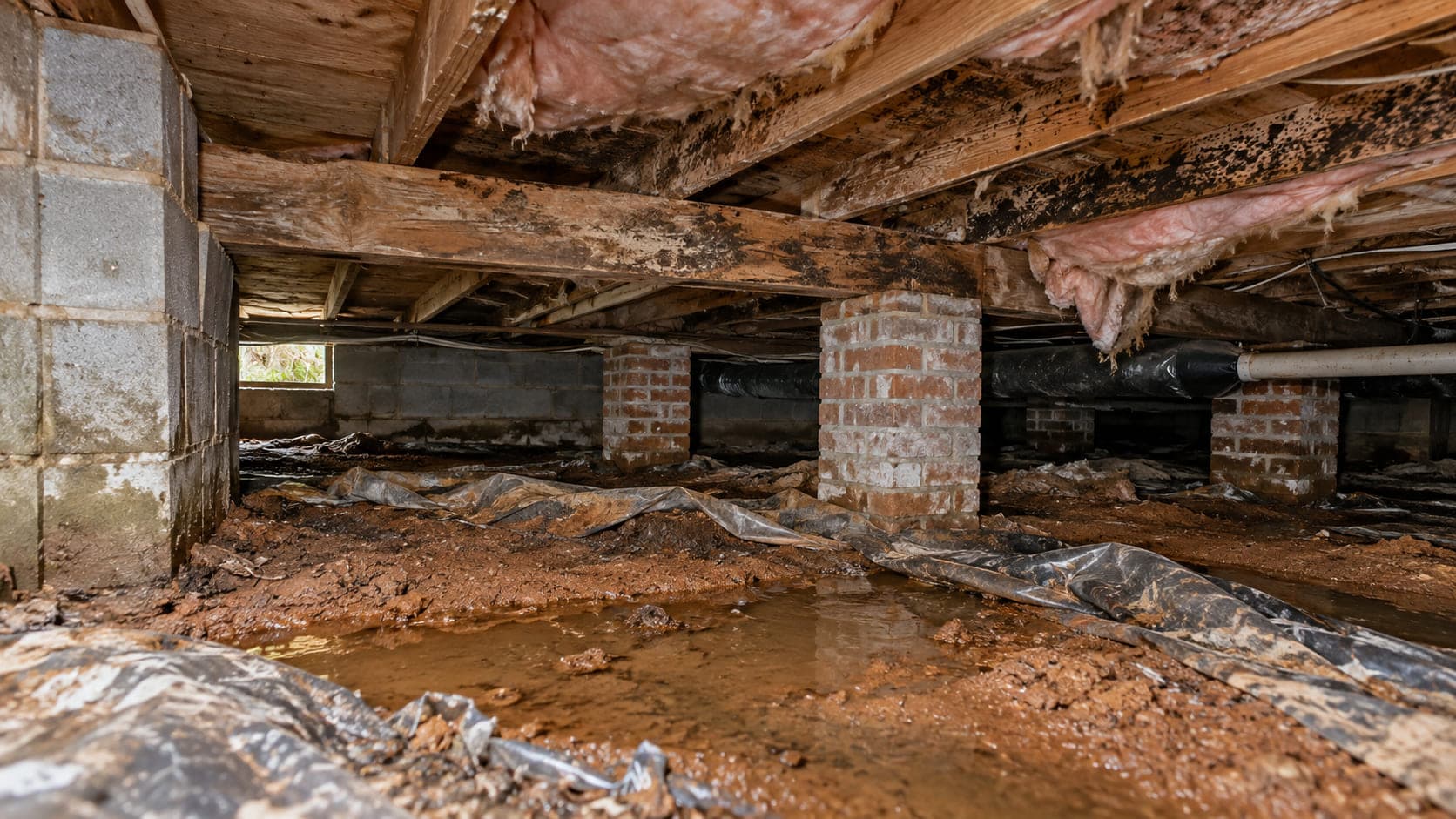
Thin, torn, or missing plastic over the soil lets the ground release gallons of water vapor into your crawlspace every day. Fuzzy white or black growth on floor joists means that vapor has already done damage. The EPA's mold cleanup guidance draws the line at about 10 square feet. Growth beyond that size calls for professional remediation, not a weekend scrub.
Pests, Wet Insulation, and Climbing Energy Bills
Camel crickets, termites, and rodents all seek out damp, dark spaces. Sagging fiberglass insulation is another flag, because insulation only droops when it has absorbed real moisture. Damp air is also harder to heat and cool. Many Clayton homeowners spot the problem in their utility bills before they ever open the crawlspace door.
Why Clayton Homes Are So Prone to Crawlspace Moisture
Clayton sits on Johnston County's clay-heavy soil, which drains slowly and holds water against foundations long after storms pass. Most homes here were built with vented crawlspaces, the North Carolina default for decades. Those vents were designed to dry the space out. In our summer climate they do the opposite, pulling in humid outdoor air that condenses beneath your floors. Fast-growing subdivisions and seventy-year-old farmhouses face the same problem. New construction is not immune, and neither is a home that has never flooded.
What Encapsulation Involves, and What NC Code Requires
Encapsulation converts a vented crawlspace into a sealed, conditioned space. Under North Carolina Residential Code section R409, a closed crawlspace must meet specific standards:
- Foundation vents are sealed so outdoor air is blocked entirely.
- A heavy vapor barrier covers 100 percent of the soil, with seams sealed and edges run up the foundation walls.
- Mechanical drying is required, usually a permanent commercial dehumidifier.
- A 3-to-4-inch inspection gap must stay visible at the top of the foundation wall for termite checks.
Converting a vented crawlspace also requires a building permit. That detail trips up homeowners who hire a generalist crew off a lead site. Glover Environmental handles the assessment, any needed mold treatment, and the code and permit details as one project. Remediation work is backed by a 5-Year Workmanship Warranty.
One caution: sealing a crawlspace over wet soil or untreated mold locks the problem in. If growth is already present, mold remediation in Clayton has to come before the liner goes down. So if you are searching crawlspace encapsulation signs near me Clayton NC, start with an inspection rather than a phone quote.
What Clayton Homeowners Should Budget
Full encapsulation in North Carolina typically runs $5,000 to $15,000. Most homeowners pay $6,000 to $9,000 for a standard 1,500-square-foot footprint. Standing water, damaged insulation, or active mold adds prep work and cost. That is another reason to act while the signs are still small. A properly installed system lasts 15 to 20 years. The dehumidifier works hardest in our climate and usually needs replacement after 8 to 12 years.
Frequently Asked Questions
How much does it cost to encapsulate a crawl space in North Carolina?
Most North Carolina projects land between $5,000 and $15,000, with $6,000 to $9,000 typical for a 1,500-square-foot home. Mold remediation, drainage, or sump pump work adds to that range. An on-site assessment is the only way to get a reliable number.
How long does crawlspace encapsulation last?
A professionally installed system lasts 15 to 20 years, and heavy 20-mil liners can go 25 or more. Plan on servicing or replacing the dehumidifier once during that span.
Do I need a dehumidifier if I encapsulate my crawl space?
Yes, in North Carolina you do. State code requires mechanical drying in a closed crawlspace, and a sealed space without one can trap humidity. A permanent dehumidifier keeps the space in the safe range year-round.
What are the downsides of crawl space encapsulation?
The main risks are upfront cost and poor installation. Sealing over wet soil or untreated wood can trap moisture and feed hidden mold growth. Choosing a company that treats the underlying moisture problem first removes most of that risk.
Will encapsulation get rid of mold that is already in my home?
No, encapsulation prevents future growth but does not clean existing contamination. Mold on joists or insulation needs proper remediation first. Glover Environmental does both, so the sequence is handled correctly.
Dry Underneath, Healthier Upstairs
Your crawlspace does not announce its problems. It hints at them through odors, floors, humidity, and energy bills. If those hints are showing up in your Clayton home, get the space evaluated before summer humidity returns. Glover Environmental provides free crawlspace assessments across Clayton and the Triangle. Our Crawl Space Encapsulation in Clayton, NC service is warrantied once the project is finished. Call 919-651-1616 and find out what is really going on under your floors.