Indoor Air Quality Testing in Raleigh: When You Actually Need It
July 25, 2026 · 5 min read
You're tired of headaches when you spend a Sunday at home. The kids are coughing more than usual. There's a faint musty smell you can't track down. Indoor air quality (IAQ) testing might be the answer — or it might be the wrong move entirely depending on the situation.
This guide walks through indoor air quality testing for Raleigh and Triangle homeowners — when it's worth doing, what it actually tests for, how much it costs, and the Triangle-specific humidity factors that affect IAQ in North Carolina homes.
Want testing instead of a guide?
Glover Environmental provides professional indoor air quality testing in Raleigh — air and surface sampling, moisture mapping, and lab-verified results in a report you can act on.
See our air quality testing serviceKey Takeaways
- Per the EPA's Introduction to Indoor Air Quality, source control and ventilation matter more than testing for most homes.
- Test when you have symptoms with no visible source, or for real estate transactions and insurance documentation.
- Triangle humidity (65-80% year-round) is the #1 driver of IAQ problems in Raleigh homes — moisture control beats air filtration.
When Indoor Air Quality Testing Is Worth It
- Persistent symptoms (headaches, allergies, fatigue) that improve when you leave home
- Recent water damage, leak, or flood — concerned about hidden mold
- Real estate transaction (buying or selling, need documented air quality)
- Insurance claim requiring air quality documentation
- Recent renovation or new construction (VOC off-gassing concerns)
- Pre-existing respiratory condition (asthma, COPD) and unexplained flare-ups
- Visible mold or musty smell with no obvious source
- Considering air purification investment — baseline test first
When Testing Is NOT the Right First Move
Per OSHA's Indoor Air Quality FAQs, there is no single test to find an IAQ problem. The CT Department of Public Health and EPA both note that testing rarely identifies a specific cause and can lead homeowners on costly investigation paths when the simpler fix is source control. Skip testing and address source directly when: visible mold under 10 sqft (just remediate), known recent water damage (just dry and inspect), obvious source like cigarette smoke or pets (address the source).
What IAQ Tests Actually Measure
Particulate Matter (PM2.5, PM10)
Fine particles from combustion (cooking, candles, fireplace), outdoor pollution intrusion, and dust. Measured continuously by electronic monitors or via single-point air sampling. Most common air quality concern in urban Raleigh.
Volatile Organic Compounds (VOCs)
Gases emitted from paints, cleaners, furniture, carpets, and building materials. New construction and recent renovations elevate VOC levels for weeks to months. Mail-in test kits or electronic monitors can detect.
Carbon Monoxide (CO)
Odorless gas from combustion appliances (gas furnaces, water heaters, ovens). Critical safety hazard. Hard-wired or battery CO detectors on every floor are the standard — air quality testing is supplementary.
Radon
Naturally occurring radioactive gas. Wake County is in EPA Zone 2 (moderate radon potential). Short-term test kits ($15-$50) detect radon over 2-7 days. Long-term kits give more accurate average. Per the EPA's Introduction to Indoor Air Quality, radon is the second leading cause of lung cancer.
Mold Spores
Air and surface testing identifies type and concentration. Per CDC mold guidance, testing is rarely required before remediation — visible mold should be remediated regardless of species. Test when symptoms exist but no visible mold is found.
Humidity
Indoor humidity above 60% supports mold and dust mite growth. Cheap hygrometers ($10-$30) provide continuous monitoring — often the highest-leverage IAQ test in Raleigh climate.
Types of IAQ Tests Available
DIY Electronic Monitors
Continuous monitoring devices like Airthings, IQAir, or budget options. Cost: $50-$400. Measure PM2.5, VOCs, CO2, temperature, humidity, sometimes radon. Best for ongoing monitoring after addressing source issues.
Mail-In Test Kits
Surface or air collection kits sent to certified labs. Cost: $40-$200 per kit. Good for specific concerns (mold, formaldehyde, VOCs). Results in 1-3 weeks. Reliable for targeted testing but expensive for comprehensive analysis.
Professional Inspector Testing
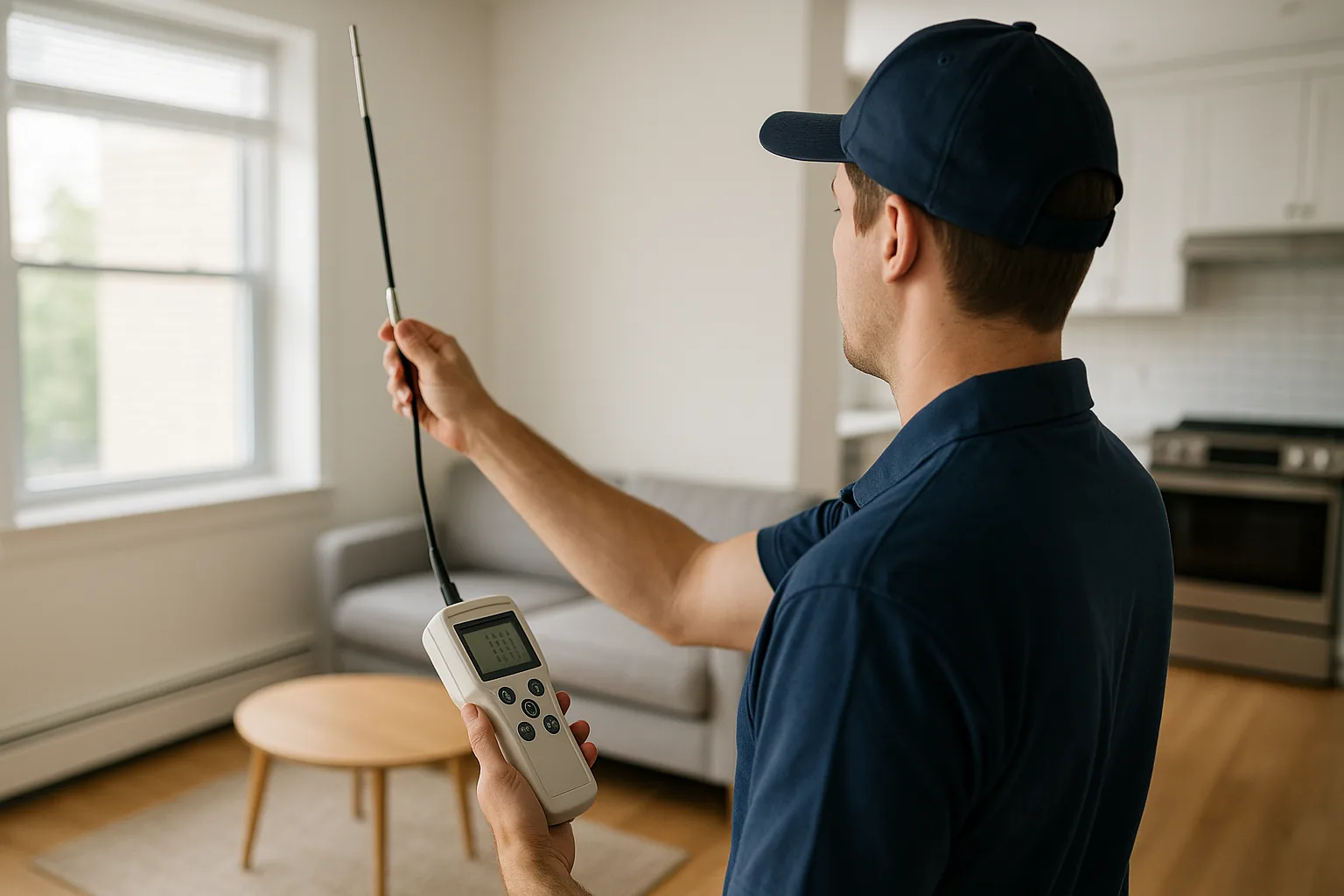
Certified IAQ inspector with calibrated equipment. Cost: $300-$1,200 depending on home size and pollutants tested. Provides actionable report and remediation recommendations. Best for real estate transactions, insurance documentation, and complex IAQ problems.
Triangle / Raleigh-Specific IAQ Factors
Three local factors drive IAQ problems in Raleigh homes. First, year-round humidity (65-80%) supports mold growth in crawl spaces, basements, and HVAC systems — moisture control is more important than air filtration here. Second, Wake County's moderate radon potential (EPA Zone 2) makes radon testing worthwhile in homes you'll occupy long-term. Third, the Triangle's tree canopy means high outdoor pollen levels that infiltrate homes — HEPA filtration on HVAC matters for allergy sufferers.
What to Do BEFORE Testing
- Source control: identify and remove obvious pollution sources (smoking, candles, harsh cleaners)
- Improve ventilation: open windows when outdoor air quality allows, run bath/kitchen exhaust fans
- HVAC filter upgrade to MERV 11-13 (most NC HVAC systems handle this)
- Run dehumidifier if indoor humidity over 55%
- Address visible mold or water damage immediately
- Wait 30 days after these changes — symptoms may resolve without testing
Frequently Asked Questions
How can I test my indoor air quality at home?
Electronic monitors (Airthings, IQAir) give continuous data. Mail-in kits target specific concerns like mold or VOCs. Hygrometers ($10-$30) measure humidity — often the highest-leverage Raleigh test. For symptoms with no visible source, professional inspection provides the most actionable report.
Is indoor air quality testing worth it?
Worth it when you have symptoms with no visible source, need documentation for real estate or insurance, or have made source-control changes that haven't resolved symptoms. Less useful when you have visible mold (just remediate) or obvious sources (just address them).
How much does indoor air quality testing cost?
DIY electronic monitors: $50-$400. Mail-in test kits: $40-$200 per test. Professional inspector testing in Raleigh: $300-$1,200 depending on home size and pollutants tested. Triangle prices align with national averages.
What are signs of poor indoor air quality?
Per OSHA and EPA: persistent headaches or allergy symptoms that improve when you leave home, musty or stale odors, visible mold, excessive dust buildup, high humidity with window condensation, and respiratory irritation in residents. Multiple symptoms together suggest air quality investigation.
Got Air Quality Concerns in Raleigh?
The right move depends on what's driving your concerns. Visible mold? Skip testing and remediate. Symptoms without visible source? Professional testing identifies what's actually in your air. New construction or recent renovation? Time + ventilation often resolve VOC concerns without testing.
Schedule a free assessment with our team — professional indoor air quality testing in Raleigh using moisture meters, thermal imaging, and air/surface sampling per IICRC S520 protocols. We test only when testing actually helps and recommend source-control alternatives when those would be more effective. Triangle-wide service across Wake, Durham, and Orange counties.