
How to Identify Water Damage in Your Wake Forest Home
September 9, 2026 · 5 min read
Each year, about one in 60 insured American homes files a claim for water damage or freezing, according to the Insurance Information Institute. Most of those claims started small: a slow drip, a hairline leak, a damp corner nobody checked. Knowing how to identify water damage in your Wake Forest home early is the difference between a repair bill and a renovation.
Key Takeaways
- Ceiling stains, cupped floors, musty odors, and unexplained water bill jumps are the most reliable early indicators.
- Mold can begin growing on damp materials within 24 to 48 hours, so speed matters more than certainty.
- Standard homeowners insurance covers sudden water damage, but natural flooding requires separate NFIP coverage.
Start With Ceilings and Walls
Water follows gravity, so the story usually starts overhead. Walk each room and look up before you look around.
Stains, Rings, and Discoloration
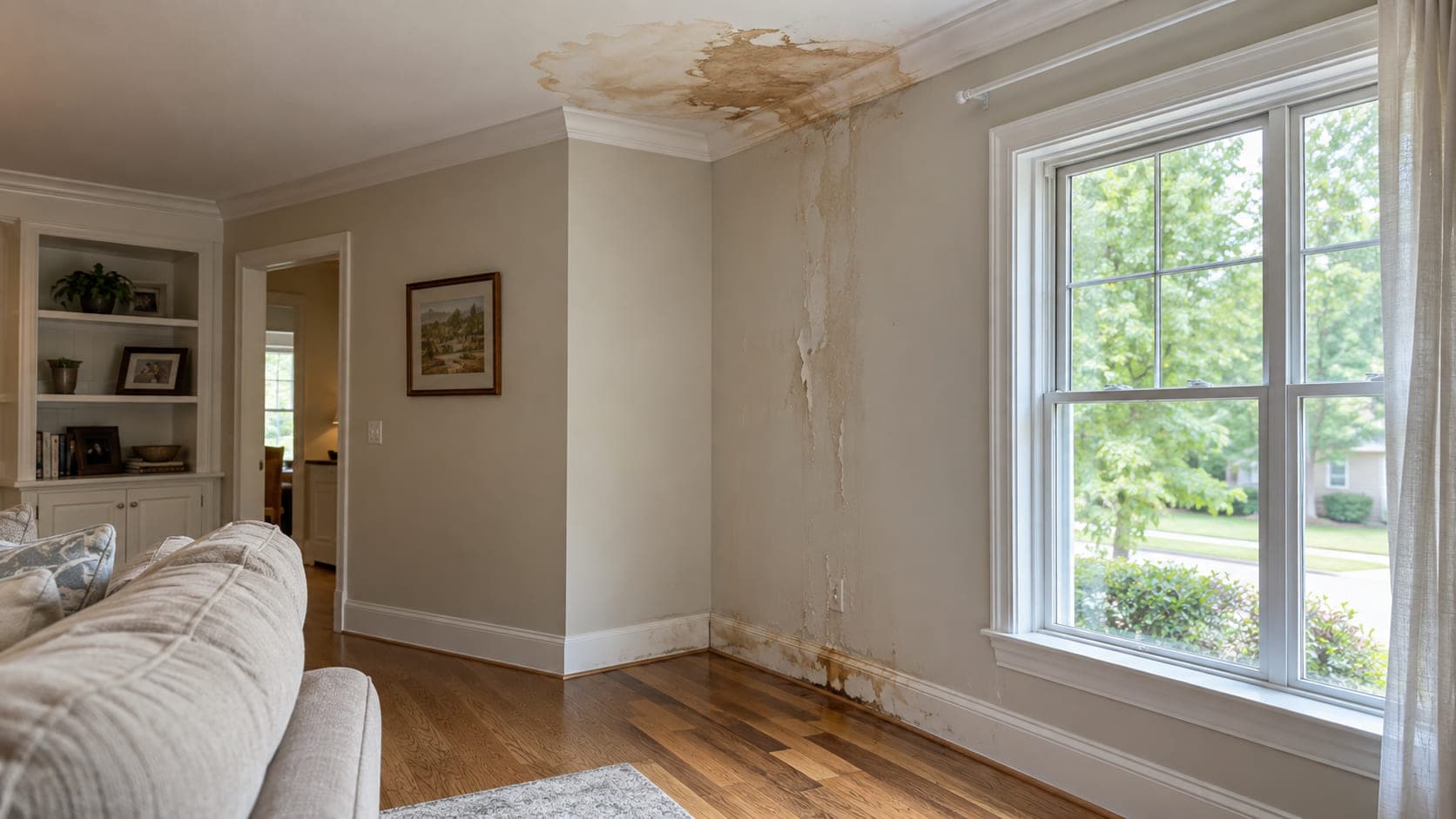
Brown or yellow rings on a ceiling mean water has pooled above at least once. A fresh stain feels damp and looks darker at the center. Multiple rings mean the leak has cycled through wet and dry more than once.
Paint and Drywall Changes
Bubbling paint, peeling patches, and soft or crumbly drywall all signal trapped moisture. Press gently on a suspect spot. If it flexes or feels spongy, the material behind it is wet.
Check Floors, Trim, and Cabinets
Lower surfaces catch what ceilings and walls let through. This is where slow leaks hide the longest.
Warped or Cupped Flooring
Hardwood boards that curl at the edges are absorbing moisture from below. Laminate swells and separates at the seams. Tile grout that darkens in one area is often wicking water from a subfloor leak.
Under Sinks and Behind Appliances
Open every cabinet with plumbing and run your hand along the back wall. Check around the dishwasher, refrigerator line, and washing machine hoses. These connections cause a large share of the sudden failures that soak Wake Forest kitchens and laundry rooms.
Follow Your Nose and Your Bills
Some water damage never shows itself visually. If you are searching how to identify water damage Wake Forest NC with nothing visible, start here. Two indirect signals catch what your eyes miss.
Musty Odors That Linger
A persistent earthy smell in one room almost always means hidden moisture. Air fresheners will not fix it, and neither will ventilation alone. If the smell returns every time you close the windows, something is wet inside the structure.
Water Bills and Warm Spots
A water bill that jumps with no change in habits points to a hidden supply leak. A warm patch on a slab floor can mean a hot water line is leaking underneath. Track your bill month to month; it is the cheapest leak detector you own.
Don't Forget Under the House
Many Wake Forest homes sit on vented crawlspaces, and that is where moisture problems hide longest. Look for standing water, damp soil, sagging insulation, or white fuzzy growth on the joists. Our region's humid summers make crawlspaces the most common source of the moisture problems we inspect. Mold can establish itself on damp wood within 24 to 48 hours, and unchecked moisture keeps feeding it. If you find growth down there, Glover Environmental pairs remediation with moisture control so the problem does not return. For water pushing in at the foundation, basement waterproofing stops it at the source.
Sudden Leak or Flood? Know the Insurance Difference
Not all water damage is treated equally by your policy. Standard homeowners insurance typically covers sudden, accidental damage, like a burst pipe or a failed water heater. Natural flooding is excluded and requires a separate policy through the National Flood Insurance Program. Wake Forest publishes flood-risk tools on the Town of Wake Forest flood hazard page, including the state FRIS lookup that shows your address's flood zone. Notably, more than one in five flood claims come from properties outside high-risk zones. Document any damage with photos before cleanup, and report claims promptly.
Frequently Asked Questions
Does homeowners insurance cover water damage in North Carolina?
It covers sudden and accidental events, such as burst pipes or appliance failures. Gradual leaks that were neglected, and natural flooding, are typically excluded. Flood coverage requires a separate NFIP or private policy.
How can I find out if a Wake Forest property has flooded before?
Check the FEMA Flood Map Service Center and the NC FRIS tool by address. You can also request a CLUE insurance claims report and ask the seller direct written questions.
How fast does mold grow after water damage?
Mold can begin colonizing damp materials within 24 to 48 hours. That window is why drying should start the same day you find the problem.
What should I do first when I find water damage?
Stop the water source if you can, then photograph everything before touching it. Move belongings away, start airflow, and get a professional moisture assessment. If materials stayed wet more than two days, ask for a mold inspection too.
Can water damage be hidden inside walls?
Yes, and it often is. Thermal imaging and moisture meters can find wet framing without opening the wall. That is how our team maps damage before recommending any work.
Found Something? Here's Your Next Move
A stain, a smell, or a spiking bill is your home asking for attention. When you spot one in Wake Forest, get the moisture mapped before it becomes mold. Glover Environmental uses thermal imaging, moisture meters, and independent lab testing across the Triangle. Our Mold Remediation & Testing in Wake Forest, NC team backs its work with a 5-Year Workmanship Warranty. Call 919-651-1616 for a free assessment, and turn that worry into a plan.