Crawl Space Mold Removal: The Raleigh Homeowner's Complete Guide
July 25, 2026 · 5 min read
Your Raleigh crawl space has mold. You noticed a musty smell coming through floor vents, found dark patches on the joists during an inspection, or discovered moisture during a real estate deal. Crawl space mold affects indoor air quality, structural integrity, and resale value — and Raleigh's humid Triangle climate makes it more common here than in drier regions.
This guide walks through crawl space mold removal for Raleigh and Triangle homeowners — the warning signs, the DIY vs professional decision, typical costs, and the moisture-control work that prevents mold from returning.
Key Takeaways
- Per the EPA mold and moisture guide, crawl space mold establishes when relative humidity stays above 60% — common in Raleigh's humid Triangle climate without proper moisture control.
- DIY removal is rarely the right call: hidden mold, structural exposure risk, and recurrence without moisture control mean professional remediation usually pays off.
- Long-term solution requires moisture control (encapsulation, dehumidifier) — removing mold without fixing moisture means it returns within months.
Signs You Have Crawl Space Mold
- Musty smell rising through floor vents or coming up at the corners of rooms
- Visible mold on joists, subfloor, or insulation when inspected (look for black, green, white, or grey growth)
- Sagging or stained insulation hanging from the subfloor
- Increased respiratory symptoms or allergies in residents (worse at home, better away)
- Wood rot or soft spots on joists when probed
- Persistent humidity inside the home above 55-60% even with AC running
- Pest activity (mold and moisture attract insects, rodents)
Why Raleigh Crawl Spaces Are Vulnerable
The Triangle region's climate creates perfect crawl space mold conditions. Outdoor humidity averages 65-80% year-round. Unsealed crawl spaces draw in this humid outdoor air, which then condenses on cooler crawl space surfaces (joists, ductwork, plumbing). Add in slab leaks, plumbing drips, poor exterior grading, or HVAC condensation issues, and you have moisture conditions that support mold growth within 24-48 hours per IICRC S520 standard.
The DIY vs Professional Decision
When DIY Might Be Reasonable
- Visible mold area under 10 square feet on hard, non-porous surfaces (per EPA guidance)
- Moisture source already identified and fixed
- No occupant respiratory sensitivity
- Crawl space is accessible and you have proper PPE (respirator, gloves, eye protection)
- No mold on insulation (which has to be removed and replaced, not cleaned)
When Professional Remediation Is Required
- Visible mold over 10 square feet (EPA threshold for professional)
- Mold on porous materials (insulation, subfloor, framing)
- Multiple species suspected or visible toxicity (black mold)
- Residents with respiratory conditions
- Real estate transaction (documented professional remediation required)
- Insurance claim involvement
- Crawl space structural concerns alongside mold
The Professional Remediation Process
Step 1: Inspection and Moisture Mapping
IICRC-certified inspector uses moisture meters and thermal imaging to identify ALL affected areas (often 2-4x larger than visible mold suggests). Air and surface testing if needed for documentation.
Step 2: Containment
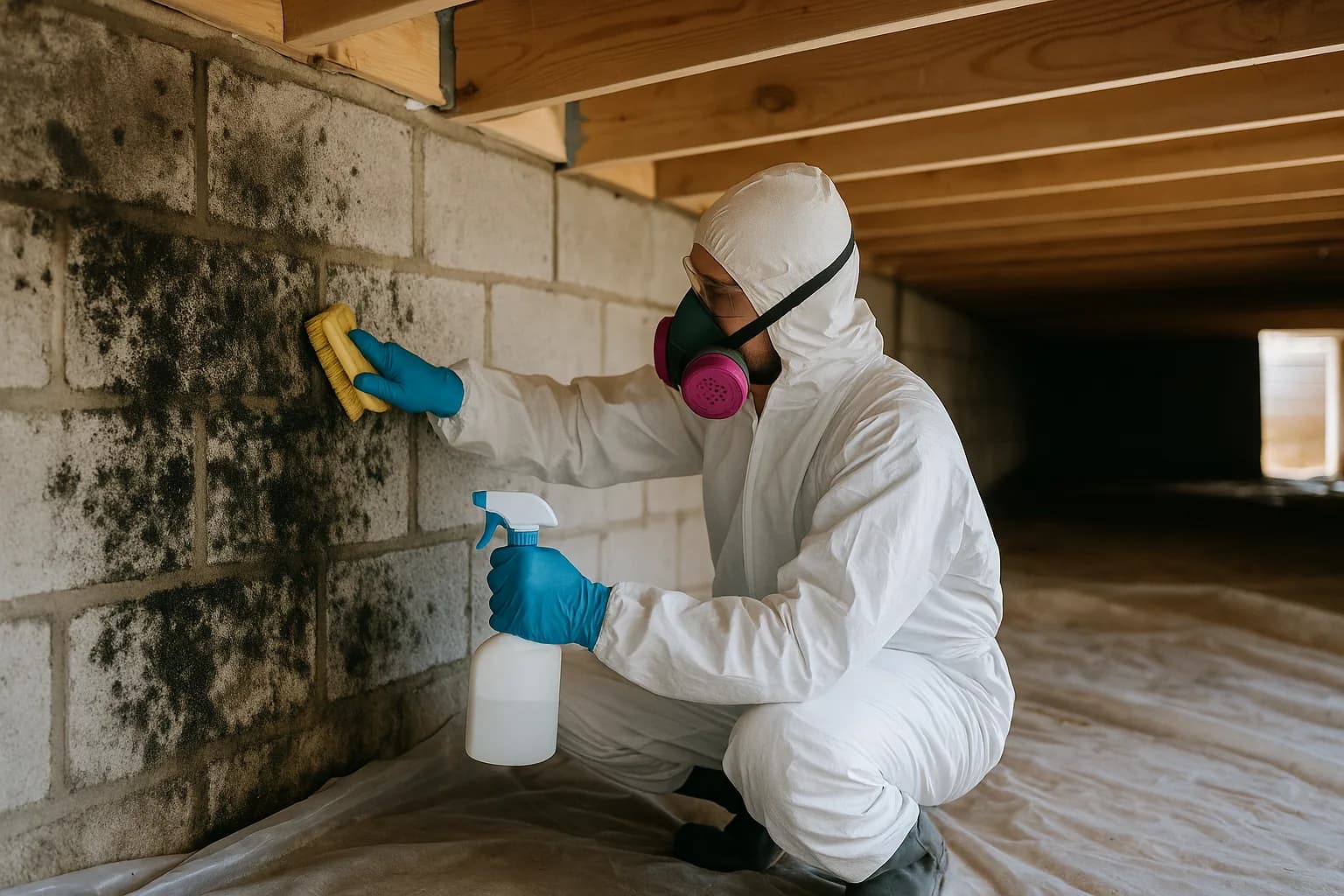
Plastic barrier containment around affected area, negative-pressure HEPA filtration to prevent spore spread, and worker PPE before any disturbance of mold.
Step 3: Source Removal
Affected insulation removed and bagged. Porous materials beyond cleaning (heavily contaminated subfloor sections) cut out. Hard surface mold cleaned with EPA-registered antimicrobial. HEPA vacuum captures spores.
Step 4: Moisture Source Fix
The most important step (and the one DIY work usually skips). Identify and fix the moisture source: plumbing leak, HVAC condensation, exterior grading, vapor barrier failure, ventilation problem. Without this, mold returns within months.
Step 5: Encapsulation and Moisture Control
Full crawl space encapsulation (sealed vapor barrier on floor and walls, sealed vents, dehumidifier installation) is the long-term solution in Raleigh's humid climate. Maintains crawl space relative humidity below 55%, preventing future mold establishment.
Step 6: Clearance Testing
Post-remediation air and surface testing confirms moisture content targets met and spore counts below acceptable levels. Documentation supports insurance claims and real estate disclosures.
Typical Costs for Raleigh Crawl Space Mold Removal
- Inspection and air testing only: $300-$800
- Small surface mold removal (under 100 sqft, accessible): $500-$1,500
- Mid-range remediation (200-500 sqft, insulation removal, antimicrobial): $1,500-$4,500
- Major remediation (full crawl space, structural exposure): $4,500-$12,000+
- Encapsulation system: $5,000-$15,000 (long-term moisture control)
- Dehumidifier installation: $1,500-$3,500
Raleigh / Triangle-Specific Considerations
Three local factors drive crawl space mold patterns in the Triangle. First, year-round high humidity (65-80%) means unsealed crawl spaces stay moist even without active water intrusion. Second, clay soils common in Raleigh hold moisture against foundations longer than sandy soils, increasing slab-side vapor intrusion. Third, summer AC condensate (HVAC equipment in crawl spaces) adds moisture daily for 6+ months/year. Encapsulation with a dedicated dehumidifier is the standard long-term solution for Triangle homes — not optional.
Frequently Asked Questions
What will kill mold in a crawl space?
EPA-registered antimicrobial products kill mold on hard surfaces. Hydrogen peroxide and certain commercial cleaners work for small surface mold. Bleach is NOT effective on porous materials and creates ventilation issues. For anything beyond small surface mold, professional remediation with proper containment is required to prevent spore spread.
How much does it cost to remove mold from a crawl space in Raleigh?
Range $500-$12,000+ depending on affected area, contamination level, insulation involvement, and whether encapsulation is included. Typical Triangle home with moderate crawl space mold and encapsulation: $6,000-$15,000 total. Inspection alone: $300-$800.
Is mold in a crawl space a big deal?
Yes, especially in Raleigh's humid climate. Crawl space air rises into living space through stack effect — what's in your crawl space ends up in your indoor air. Untreated crawl space mold affects respiratory health, attracts pests, causes wood rot in structural members, and creates major resale problems.
How long does crawl space mold remediation take?
Small surface remediation: 1-3 days. Mid-range with insulation removal: 3-7 days. Full remediation with encapsulation: 5-10 days. Air clearance testing after remediation adds 2-4 days for lab results. Total turnaround typically 1-2 weeks for documented professional work.
Raleigh Crawl Space Mold? Don't Wait
Crawl space mold doesn't stay in the crawl space — it spreads to indoor air, attracts pests, and damages structural framing. The Triangle's humid climate accelerates everything. Documented professional remediation with encapsulation is the long-term solution.
Schedule a free crawl space inspection with Crawl Space Mold Removal in Raleigh. IICRC-certified, 5-year warranty, and complete crawl space encapsulation services across Wake, Durham, and Orange counties.