Black Mold vs Regular Mold: What Raleigh Homeowners Need to Know
September 14, 2026 · 6 min read
You found dark patches in your Raleigh home and you're worried it's "black mold" — the kind everyone warns about. Before you panic, the actual science is more nuanced than internet fear-mongering suggests. The differences between black mold (specifically Stachybotrys chartarum) and regular mold matter — but maybe not in the ways you've heard.
This guide walks through the real differences between black mold and other mold types for Raleigh and Triangle homeowners, the actual health risks per CDC and EPA, and when testing is worth it versus going straight to remediation.
Key Takeaways
- "Black mold" usually refers to Stachybotrys chartarum, but many other mold species also appear black — color alone doesn't identify the species.
- Per EPA mold and health guidance: all mold can affect indoor air quality and should be removed regardless of species — testing is rarely required before remediation.
- Raleigh's humid climate supports rapid growth of many mold species, including Stachybotrys when conditions allow (chronic wetness 7+ days).
What "Black Mold" Actually Means
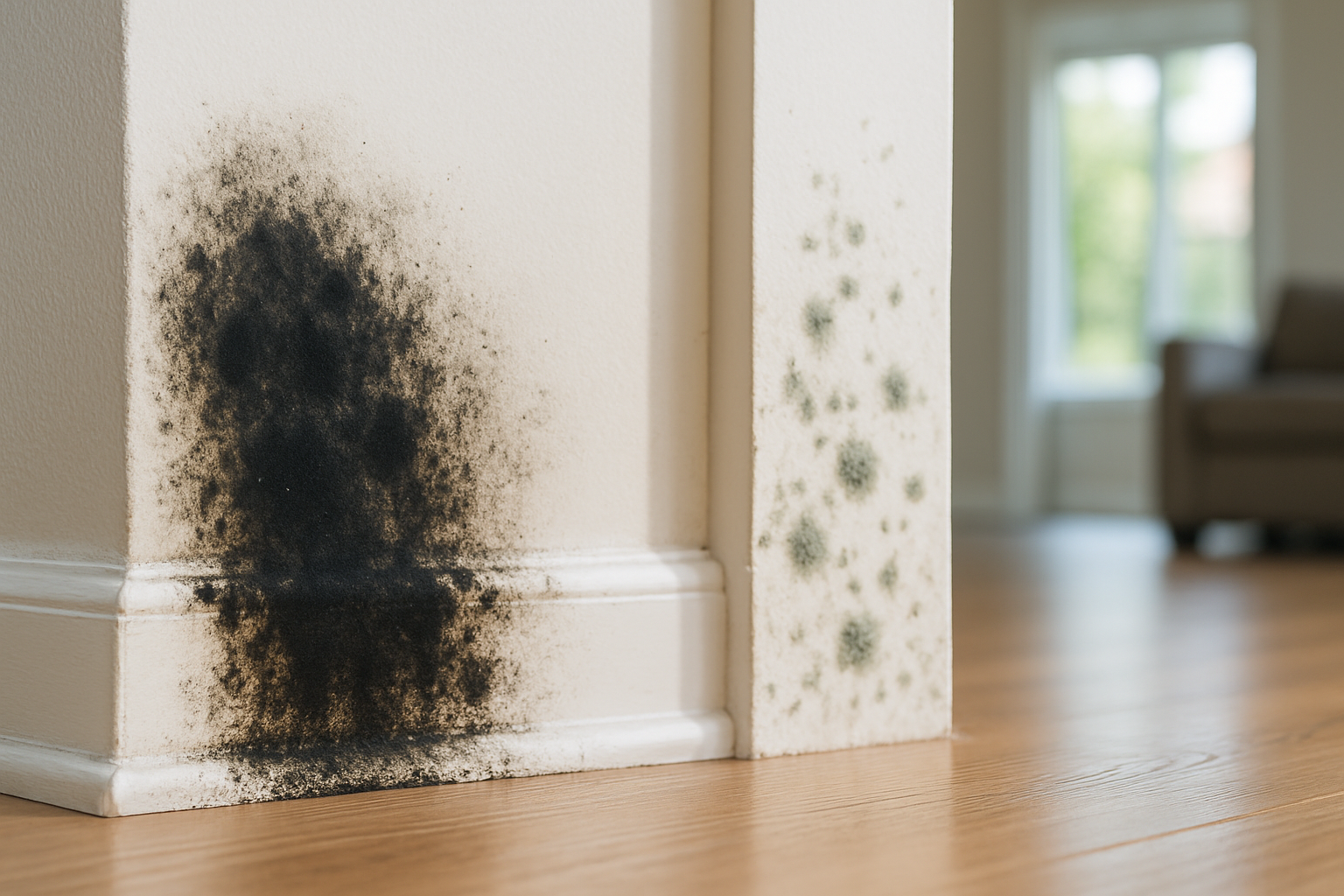
The term "black mold" typically refers to Stachybotrys chartarum — a greenish-black mold that grows on cellulose-rich materials (drywall, paper, wood) when chronically wet. But many common molds also appear dark: Cladosporium, Aspergillus niger, Alternaria, certain Penicillium species. You cannot identify the species by color alone. Visual identification is unreliable; only lab testing confirms species.
How Black Mold Differs from Other Molds
Growth Conditions
Stachybotrys is slower to establish than most molds — it requires materials to stay wet for 7+ days, typically only growing where there's been a chronic moisture problem (slow leak, ongoing condensation, flood-affected materials not properly dried). Other common indoor molds (Cladosporium, Aspergillus, Penicillium) establish within 24-48 hours of moisture exposure.
Appearance and Texture
Stachybotrys: dark greenish-black, often slimy or wet-looking, distinctive musty smell. Cladosporium: olive-green to brown. Aspergillus: highly variable (green, yellow, black, white). Penicillium: blue-green or white. Mildew (subset of mold types): flat, powdery, gray or white. Texture and pattern matter more than color for species hints, but only lab testing confirms identification.
Mycotoxin Production
Stachybotrys can produce mycotoxins (specifically trichothecenes) under certain conditions. But mycotoxin production isn't constant — it depends on the substrate, moisture level, and growth phase. Per CDC, the link between specific mold-derived mycotoxin exposure in homes and definitive health outcomes is less established than internet sources suggest. That said, no mold exposure is considered beneficial.
The Real Health Risks Per CDC and EPA
Per CDC mold health effects and EPA guidance: All indoor mold can affect health, particularly in sensitive individuals (allergies, asthma, immunocompromised, infants, elderly). Common symptoms across mold species: nasal congestion, eye irritation, cough, throat irritation, allergic reactions, asthma aggravation. Severe reactions are rare and typically occur in people with specific allergies or compromised immune systems. The CDC's official position: regardless of species, remediate visible indoor mold and fix the moisture source — testing is rarely needed.
When Testing Is Worth It
- Symptoms exist but no visible mold (find the hidden source)
- Real estate transactions (documented disclosure)
- Insurance claim documentation
- Post-remediation clearance (confirms remediation success)
- Litigation involving mold exposure
- Sensitive occupants (immunocompromised, severe allergies) wanting baseline air quality
When to Skip Testing and Go to Remediation
- Visible mold present (per EPA: remediate regardless of species)
- Known moisture source (slab leak, flood) with confirmed water exposure
- Mold over 10 square feet visible
- Sewage-source water contamination (Cat 3 — always remediate)
- Cost-comparison: testing $300-$800 vs immediate remediation often cheaper for small jobs
The Raleigh Humidity Factor
Triangle climate (year-round 65-80% relative humidity outdoors) supports many mold species. Common indoor molds in Raleigh homes: Cladosporium (most common, brown/black, in HVAC and damp areas), Aspergillus (very common indoor mold, multiple colors), Penicillium (blue-green, in damp building materials), Stachybotrys (less common but possible after chronic water events). The high humidity means Raleigh homes need active moisture control (AC, dehumidification, ventilation) year-round to prevent mold establishment.
If the dark growth is in a crawl space or attic, our mold remediation service covers the containment and removal steps for those spaces.
Remediation Process (Same Regardless of Species)
Per IICRC S520, the remediation process is the same regardless of mold species: identify and fix moisture source, contain affected area with plastic barriers and HEPA negative pressure, remove contaminated porous materials (drywall, insulation, carpet) and HEPA-clean hard surfaces, apply EPA-registered antimicrobial, verify dryness to moisture content targets, and conduct post-remediation clearance verification. The species doesn't change the protocol — visible mold is treated as a moisture problem requiring full remediation.
Frequently Asked Questions
How do I know if I have black mold or regular mold?
You can't tell by visual inspection alone — many mold species appear dark. Stachybotrys (true black mold) is slimy or wet-looking and grows on chronically wet cellulose materials. Other common dark molds (Cladosporium, Aspergillus niger) look similar. Only lab testing confirms species. EPA position: identification doesn't change remediation — fix moisture, remove mold.
Is all mold toxic or just black mold?
All mold can produce allergens, irritants, and (in some species) mycotoxins. The "toxic" label often associated with black mold is oversimplified. Per CDC, severe reactions to indoor mold exposure are rare and typically occur in sensitive individuals. All indoor mold should be remediated regardless of species.
Can black mold cause serious illness?
Per CDC, black mold exposure can cause allergic reactions, respiratory irritation, and asthma aggravation in susceptible individuals. The dramatic "toxic mold syndrome" claims often seen online aren't well-supported by current medical evidence. That said, no mold exposure is considered safe — remediation is recommended for any visible indoor mold.
What should I do if I find dark mold in my Raleigh home?
Don't panic, don't try to identify species visually. For visible mold under 10 sqft on hard surfaces with known clean-water source: clean with EPA-registered antimicrobial and PPE. For anything larger, porous materials, contaminated water, or sensitive occupants: get an IICRC-certified mold remediation assessment. Skip testing unless you have a specific reason (real estate, insurance, symptoms with no visible source).
Found Mold in Your Raleigh Home?
The species name matters less than the response speed. Whether it's Stachybotrys, Cladosporium, or any other dark indoor mold, the IICRC S520 remediation protocol is the same: fix the moisture, contain the area, remove and clean per standard, verify dryness, document for insurance.
Get a free mold assessment from Glover Environmental in Raleigh. IICRC-certified mold experts handling both black mold and other species across the Triangle, with 5-year workmanship warranty and documentation supporting insurance claims and real estate disclosures. Start with our residential mold remediation in Raleigh team.