Hidden Mold in Raleigh Homes: 7 Warning Signs
May 18, 2026 · 8 min read
Your Raleigh home looks fine. The walls are clean, the ceilings unmarked. But you have noticed a faint musty smell in the master bedroom, and your seasonal allergies feel worse than usual. The next question every Triangle homeowner asks: could there be hidden mold?
This guide walks through the 7 warning signs of hidden mold in Raleigh homes, why Triangle humidity makes it more common here, and when to call a professional inspector. If you have already spotted obvious signs, our Mold Remediation Raleigh page covers the full inspection-to-clearance process.
Key Takeaways
- Persistent musty odors are the #1 warning sign — appearing days to weeks before any visible mold growth.
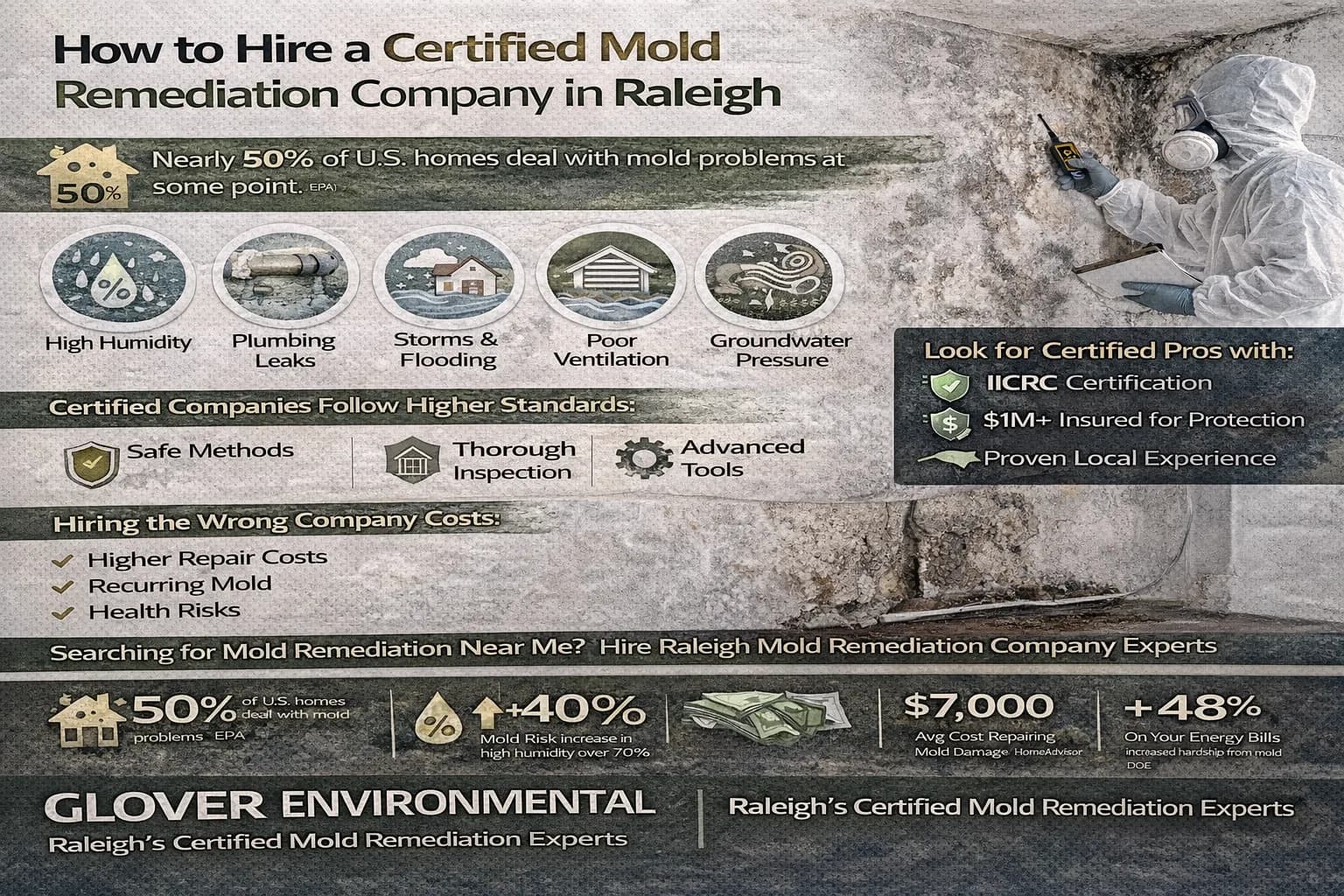
- Raleigh humidity (70%+ year-round) makes hidden mold colonization much faster than national averages.
- A $300-$500 professional mold inspection often catches hidden mold before it becomes a $5,000+ remediation job.
7 Warning Signs of Hidden Mold in Your Raleigh Home
1. Persistent Musty or Earthy Smell
The most reliable early indicator. A musty smell that won't go away — especially in basements, crawlspaces, closets, or behind appliances — almost always means moisture and microbial activity. Mold colonies produce volatile organic compounds (mVOCs) that you can smell long before any visible growth appears.
2. Allergy or Respiratory Symptoms That Improve Outside
Per CDC guidance, mold spores trigger congestion, sneezing, sinus headaches, sore throat, and worsening asthma. The tell: symptoms get worse indoors and better outdoors. If your family has been feeling worse at home for weeks, hidden mold is a leading suspect.
3. Wall, Ceiling, or Baseboard Discoloration
Yellow, tan, or brown staining (not black yet) often signals mold growth behind the surface. Pay attention to corners, around windows, near plumbing fixtures, and at the floor-to-wall joint where moisture accumulates.
4. Bubbling Paint, Peeling Wallpaper, or Warped Drywall
When paint or wallpaper bubbles outward without an obvious water source, moisture is trapped behind the surface. Mold is almost certainly present in the substrate. Warped or buckling drywall confirms the problem extends behind the visible layer.
5. Condensation on Windows, Walls, or HVAC Components
Persistent condensation indicates humidity above 60% — the threshold for active mold growth. In Raleigh humidity, condensation on north-facing walls or in poorly ventilated bathrooms means active mold pressure.
6. Recent Water Damage or Plumbing Issues
Any water event in the past 12-24 months — burst pipe, roof leak, AC condensate failure, basement seepage — should trigger a mold inspection. Hidden mold from past water damage often takes 6-12 months to become detectable.
7. Crawl Space or Attic Vapor Issues
Older Raleigh homes (Five Points, Cameron Park, Hayes Barton) commonly have shallow crawlspaces and attics with inadequate ventilation. Mold thrives in these unconditioned spaces and spreads to living areas through the HVAC system.
Why Hidden Mold Is More Common in Raleigh
Per NWS Raleigh climate data, the Triangle averages 70%+ humidity year-round and 43+ inches annual rainfall. Mold colonization happens within 24-36 hours of moisture exposure (vs 48-72 hours nationally). Combined with the older housing stock and crawlspace construction common in central NC, hidden mold is a constant pressure for Raleigh-area homeowners.
When to Call a Professional Mold Inspector
- Multiple warning signs present. Two or more from the list above significantly increases the likelihood of hidden mold.
- Pre-purchase inspection. Standard home inspections often skip mold-specific testing — a separate mold inspection ($300-$500) protects your investment.
- Recent water event. Even if cleanup seemed complete, hidden mold can develop in wall cavities, insulation, and subfloor weeks later.
- Family health symptoms persist. If allergy or respiratory issues do not resolve with normal allergy treatment, indoor air quality testing identifies mold spores.
What Professional Mold Inspection Actually Includes
A real mold inspection in Raleigh runs $300-$600 and includes: visual inspection of all suspect areas, moisture meter readings on walls and floors, infrared thermal imaging to detect hidden moisture, and 2-4 air samples sent to an independent lab for spore identification. The full report identifies mold species, concentration, and recommended remediation scope.
Per EPA guidance, any contiguous mold area larger than 10 square feet should be handled by a licensed remediator. The inspection report determines whether you need full professional remediation or DIY cleanup is sufficient.
Frequently Asked Questions
1. How can you tell if mold is hidden in walls?
Look for bubbling paint, warped drywall, persistent musty odor, water staining, or unexplained allergy symptoms. Confirmation requires either thermal imaging (detects moisture behind walls) or invasive inspection (cutting a small access hole). Air sampling identifies mold spores even when growth is hidden.
2. What does hidden mold smell like?
Musty, earthy, damp — often described as a wet basement smell or like old gym socks. The smell intensifies in poorly ventilated areas and during humid weather. Some species produce a sharper chemical odor.
3. Can mold make you sick without you seeing it?
Yes. Per CDC research, mold spores travel through HVAC systems and trigger respiratory symptoms even when growth is hidden behind walls or in attic spaces. Symptoms include congestion, headaches, fatigue, and worsening asthma — often misdiagnosed as seasonal allergies.
4. How long can hidden mold go undetected?
Months to years. Mold in wall cavities, attic insulation, or crawlspaces can grow undetected for 1-5 years before becoming visible. By the time visible growth appears, the underlying moisture problem and structural impact are often significant.
Suspect Hidden Mold in Your Raleigh Home?
A $300-$500 professional inspection is the cheapest insurance against a $5,000-$15,000 reactive remediation job. Glover Environmental serves the Triangle area with IICRC-certified inspections, infrared thermal imaging, and lab-verified air sampling. Visit our mold remediation page to schedule a free consultation.